
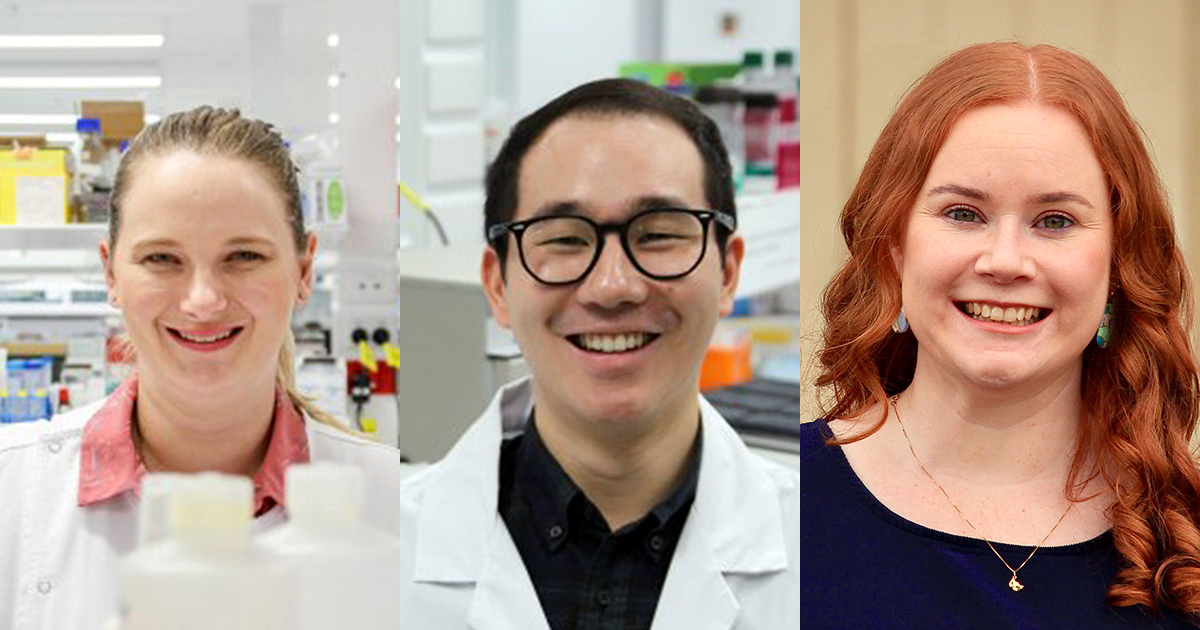
Three emerging research projects advancing the Wesfarmers Centre of Vaccines & Infectious Diseases' (WCVID) flagship research priorities have this week received a major funding boost through the latest WCVID Catalyst Grants.
Each project will receive up to $100,000 to accelerate innovative research addressing some of the world's most pressing infectious disease challenges. The projects align with the WCVID's long-term focus on accelerating Aboriginal health equity, safeguarding the early years through infection identification and prevention, recognising and responding to life-threatening infections, and combatting antimicrobial resistance.
Designed to help researchers build scientifically robust programs of work, the Catalyst Grants position projects to secure competitive national and international funding while encouraging collaboration across research teams and external partners to maximise translational impact.
This year's recipients are Dr Sharon Clark, Dr Christian Tijam and Dr Stephanie Enkel.
Dr Sharon Clark is investigating why some children develop chronic and recurrent middle ear infections, with a focus on the bacteria non-typeable Haemophilus influenzae (NTHi), the leading cause of persistent disease. Her research will identify the proteins the bacteria produce when forming protective biofilms that allow them to evade treatment and examine how children's immune systems respond to these proteins.
By comparing immune responses in children with and without chronic ear infections, Dr Clark aims to identify new targets for more effective vaccines and treatments, helping prevent hearing loss and improve long-term health and developmental outcomes, particularly for Aboriginal and Torres Strait Islander children who are disproportionately affected.
Dr Christian Tijam is exploring the potential of "trained immunity" to understand how vaccines can boost the body's defences against a wide range of respiratory infections, not just a single disease.
His team will develop and apply cutting-edge technologies to a new intranasal vaccine to assess the potential for specific and broad-spectrum protection against respiratory infections. It is hoped the study will help inform vaccination strategies that deliver broader protection and improved public health outcomes.
Dr Stephanie Enkel is focused on determining how artificial intelligence can improve the way childhood skin infections are identified and described in research, particularly for Aboriginal and other children with skin of colour. Using a large, ethically governed collection of de-identified clinical photographs from more than a decade of skin health research, she is assessing whether AI can accurately classify and describe skin infections compared with expert clinicians.
Her goal is to create more consistent, inclusive and equitable tools for research and clinician education to facilitate earlier recognition and better care for children most affected by skin infections.
The WCVID would like to express its gratitude to the Catalyst Grant Review Panel:
- Professor Dan McAullay
- Professor David Mackey AO
- Professor Jeff Keelan
- Professor Prue Hart
- Associate Professor Raelene Endersby (Chair)
First published Friday 31 July 2026.
View all news articles