
Search
This study examines whether nonstandard work schedules (NSWS) improve or hinder work-life balance (WLB) for parents and non-parents in dual-earner households.
Technological advances have transformed when and for how long individuals work, a process associated with increasing polarization and precarity. Using the European Working Conditions Survey (2005-2015), we examined parental work schedules and hours across welfare regimes covering 29 European countries.
Despite increasing urbanisation, little is known about skin health for urban-living Aboriginal children and young people (CYP, aged <18 years). This study aimed to investigate the primary care burden and clinical characteristics of skin conditions in this cohort.
Ensuring that Aboriginal and Torres Strait Islander children removed from their families by child protection services remain connected to their kin, Country and culture is a priority to begin to redress the intergenerational trauma and harm caused by colonisation. This article describes the views of staff working in three mainstream out-of-home care organisations, where children are cared for by non-Indigenous foster carers.
Globally, Indigenous peoples have incurred significant harm due to colonisation of their lands. Dispossession of culture, language, family and land, and the historical, systematic removal of children in Australia (the ‘Stolen Generation’), has resulted in evident ongoing negative outcomes in the contemporary lives of Aboriginal and Torres Strait Islander people.
Yalemzewod Assefa Gelaw PhD, MPH, BSc Honorary Research Associate Yalemzewod.Gelaw@thekids.org.au Honorary Research Associate Dr Yalemzewod Gelaw
Vaccination scholarship focuses on how privilege, individualized choice and ‘intensive’ and ‘natural’ parenthood – often motherhood – lead people to delay or not vaccinate their children. Recently, examining parents’ vaccination responsibilities – and the inequalities in paid employment and unpaid care work underpinning them – has become important to understand COVID-19.
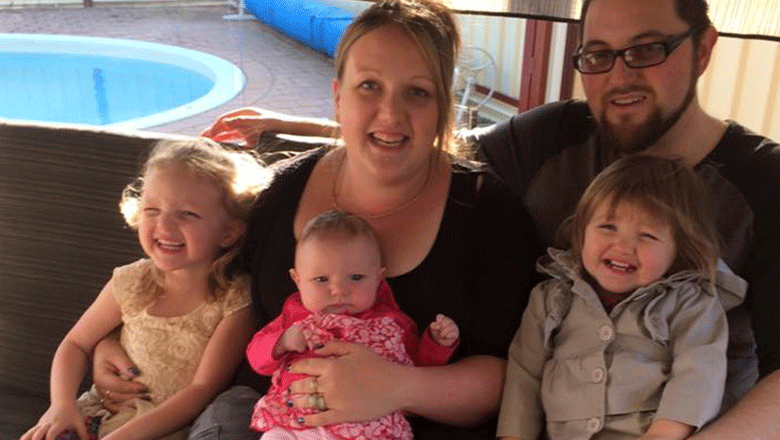
The Kids Research Institute Australia researchers are offering a free nutrition and lifestyle program for plus sized mums and their babies who live in the Joondalup area.
There is an urgent need for scalable interventions to promote physical activity in early childhood. An early childhood education and care physical activity policy intervention with implementation support strategies (Play Active) has been proposed for scale-up in Australia.
Family carers of youth recovering from early psychosis experience significant stress; however, access to effective family interventions is poor. Digital interventions provide a promising solution.