
Search
We present a new analysis of Whitehouse, Maybery, and Durkin's (2006, Experiment 3) data on inner speech in children with autism (CWA).
Developmental language disorder is a heterogeneous diagnostic category. Little research has compared the long-term outcomes of children with different...
Some individuals with autism spectrum disorders (ASD) experience linguistic difficulties similar to those found in individuals with specific language...
Three experiments investigated the role of inner speech deficit in cognitive performances of children with autism.
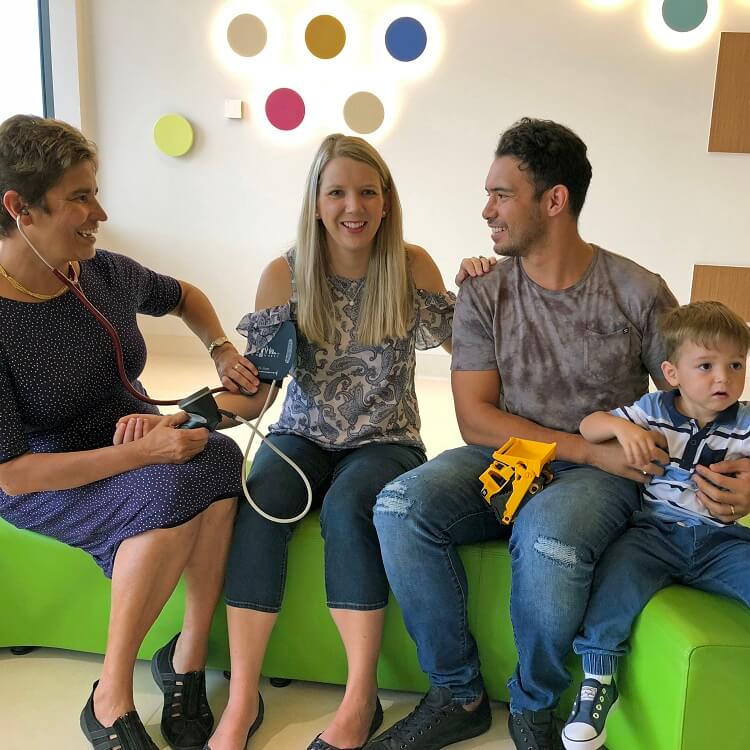
ORIGINS, a collaboration between The Kids and the Joondalup Health Campus, has achieved a major milestone – recruiting its 1000th family.
The number of words children produce (expressive vocabulary) and understand (receptive vocabulary) changes rapidly during early development, partially due to genetic factors. Here, we performed a meta-genome-wide association study of vocabulary acquisition and investigated polygenic overlap with literacy, cognition, developmental phenotypes, and neurodevelopmental conditions, including attention-deficit/hyperactivity disorder.
New research links poor language to lack of Vitamin D in womb.
Telethon Kids Institute researchers have been awarded an Australian Research Council grant to explore how testosterone levels in the womb can impact on a child'
Reading and writing are crucial life skills but roughly one in ten children are affected by dyslexia, which can persist into adulthood. Family studies of dyslexia suggest heritability up to 70%, yet few convincing genetic markers have been found.