
Search
Showing results for "early life"
Chronic, low-intensity air pollution exposure has been consistently associated with reduced lung function throughout childhood. However, there is limited research regarding the implications of acute, high-intensity air pollution exposure. We aimed to determine whether there were any associations between early life exposure to such an episode and lung growth trajectories.
Reduced eye contact early in life may play a role in the developmental pathways that culminate in a diagnosis of autism spectrum disorder. However, there are contradictory theories regarding the neural mechanisms involved. According to the amygdala theory of autism, reduced eye contact results from a hypoactive amygdala that fails to flag eyes as salient. However, the eye avoidance hypothesis proposes the opposite-that amygdala hyperactivity causes eye avoidance. This review evaluated studies that measured the relationship between eye gaze and activity in the 'social brain' when viewing facial stimuli.
In asthma, a significant portion of the interaction between genetics and environment occurs through microbiota. The proposed mechanisms behind this interaction are complex and at times contradictory. This review covers recent developments in our understanding of this interaction: the "microbial hypothesis" and the "farm effect"; the role of endotoxin and genetic variation in pattern recognition systems; the interaction with allergen exposure; the additional involvement of host gut and airway microbiota; the role of viral respiratory infections in interaction with the 17q21 and CDHR3 genetic loci; and the importance of in utero and early-life timing of exposures.
Language development is one of the most important developmental accomplishments of early childhood and is the foundation for literacy, educational...
This project will investigate the effects of the time interval between pregnancies (interpregnancy interval), family size and other sociodemographic factors on child development outcomes at age five.
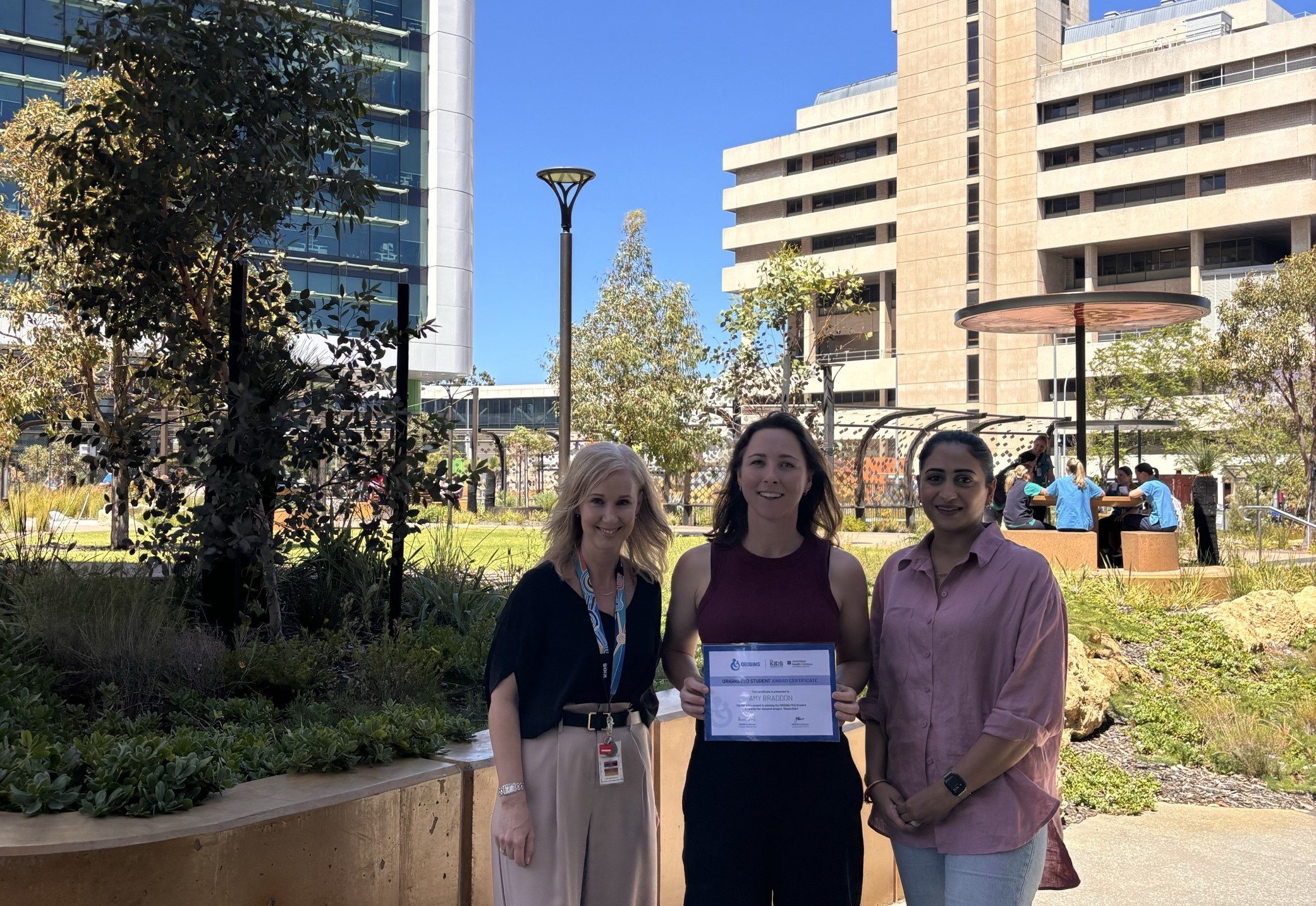
Miss Braddon will be awarded with $15,000 to go towards her research project, DreamStart
Desiree Dr Jackie Susan Lisa Zenobia Silva Davis Prescott Gibson Talati MBBS, FRACP, MPH, PhD BSc (Hons), PGradDipHlthProm, PhD MBBS BMedSci PhD
Two lytic double-stranded DNA (dsDNA) bacteriophages, belonging to the family Herelleviridae, were isolated from wastewater in Western Australia. Biyabeda-mokiny 2 appears to belong to the genus Kayvirus, and Koomba-kaat 1 to Silviavirus.
Wearable motion sensors, specifically, Inertial Measurement Units, are useful tools for the assessment of orientation and movement during sleep. The DOTs platform (Xsens, Enschede, The Netherlands) has shown promise for this purpose. This pilot study aimed to assess its feasibility and validity for recording sleep biomechanics.
CDKL5 Deficiency Disorder (CDD) is a rare, X-linked dominant condition that causes a developmental and epileptic encephalopathy (DEE). The incidence is between ~ 1:40,000 and 1:60,000 live births. Pathogenic variants in CDKL5 lead to seizures from infancy and severe neurodevelopmental delay.