
Search
Showing results for "early life"
Intraoperative isoelectric electroencephalography (EEG) has been associated with hypotension and postoperative delirium in adults. This international prospective observational study sought to determine the prevalence of isoelectric EEG in young children during anesthesia.
Survival statistics, estimated using data from national cystic fibrosis (CF) registries, inform the CF community and monitor disease progression. This study aimed to estimate survival among people with CF in Australia and to identify factors associated with survival.
The Kids Research Institute Australia has welcomed the Federal Government's commitment to a Medical Research Future Fund to improve the long term health of Australians.

Ever wondered just what your gift means to us? Here's a snapshot.
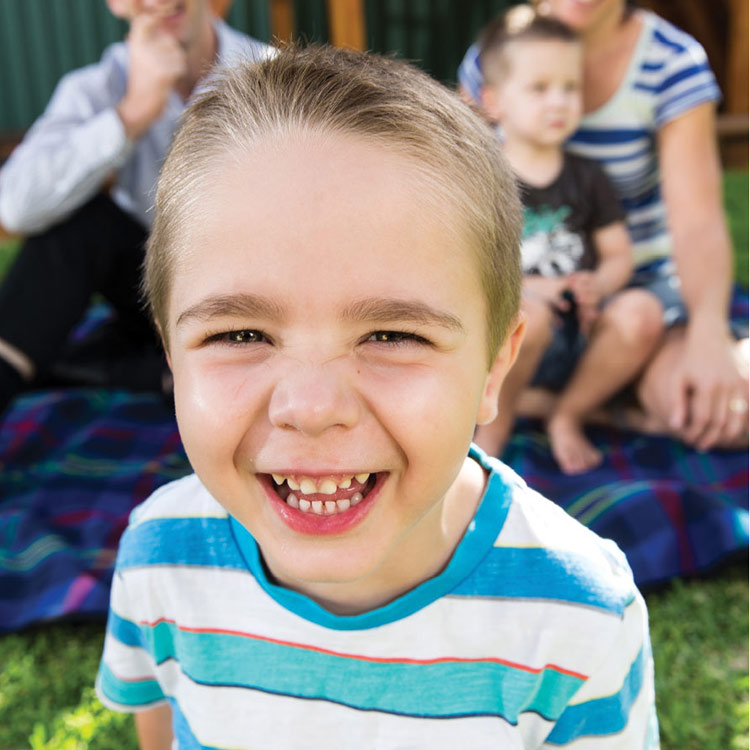
At 6 weeks old David was diagnosed as having cystic fibrosis. His parents say that his involvement in research offers them their greatest hope for his future.
The widespread use of technology in daily life has raised concerns about its potential to disrupt social relationships, particularly within one of the most important human relationships: the parent-child relationship. This study assesses whether parental social media use (measured by a novel parental social media intensity scale) affects the parent-child relationship (measured by the child-parent relationship scale - short form), and whether parental self-efficacy (PSE, measured by the parenting sense of competence scale) moderates this effect.
CDKL5 deficiency disorder (CDD) is a rare developmental and epileptic encephalopathy (DEE) associated with multiple impairments and comorbidities. Outcome measures for disease-modifying clinical trials for DEEs should measurably capture a spectrum of caregiver priorities and be externally validated.
Culturally safe healthcare approaches are important to improve outcomes of Indigenous people. Non-Indigenous clinicians are often ill-prepared to provide such healthcare. The NHMRC Centre for Research Excellence (CRE) especially for First Nations Children has been studying for several years how to improve clinical care for Indigenous children with respiratory disease in hospital, clinic, urban, rural and remote settings.
Bronchiectasis is a worldwide chronic lung disorder where exacerbations are common. It affects people of all ages, but especially Indigenous populations in high-income nations. Despite being a major contributor to chronic lung disease, there are no licensed therapies for bronchiectasis and there remain relatively few randomised controlled trials (RCTs) conducted in children and adults.
The stillbirth rate among Aboriginal and Torres Strait Islander women and communities in Australia is around double that of non-Indigenous women. While the development of effective prevention strategies during pregnancy and improving care following stillbirth for women and families in communities has become a national priority, there has been limited progress in stillbirth disparities. With community permission, this study aimed to gain a better understanding of community experiences, perceptions, and priorities around stillbirth.