
Search
Showing results for " https://www.galaxus.ch/en/sector/showdiscussion/cvv-shop-visit-amsigacom-kzr0okq5-221497"

Our aim is for all kids to have healthy skin. We work with communities to reduce the burden of Strep A skin sores and sore throats to prevent rheumatic fever.
Antimicrobial resistance (AMR) is a global healthcare emergency, directly causing 1.3 million deaths per year and predicted to increase dramatically over the coming decades. Understanding the molecular mechanisms underpinning antibiotic resistance is central to approaches for AMR surveillance and diagnosis in a clinical laboratory.
A hallmark of Listeria (L.) monocytogenes pathogenesis is bacterial escape from maturing entry vacuoles, which is required for rapid bacterial replication in the host cell cytoplasm and cell-to-cell spread. The bacterial transcriptional activator PrfA controls expression of key virulence factors that enable exploitation of this intracellular niche.

Embracing the Mind is hosted by Embrace senior researchers Dr Alix Woolard and Dr Karen Lombardi.
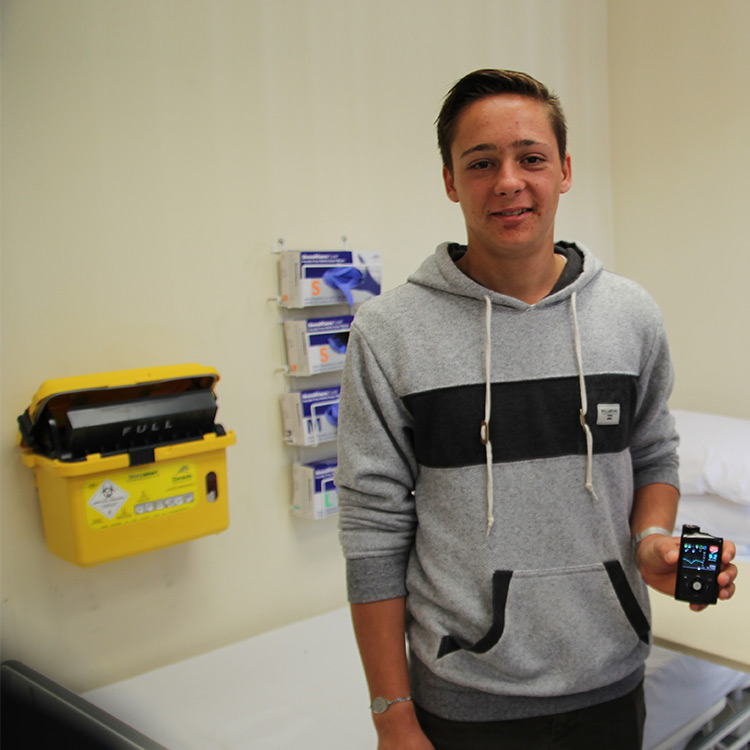
The study involved screening young people to learn more about the development of long-term kidney, eye and cardiovascular complications in adolescents with T1D.
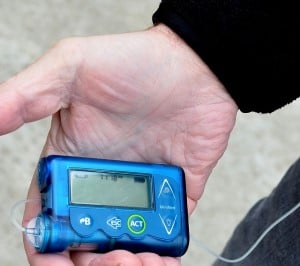
The Children’s Diabetes Centre at The Kids Research Institute Australia is leading the longest and largest at-home trial of a hybrid closed-loop insulin pump system.
Group A Streptococcus (GAS) is a Gram-positive bacterial pathogen that causes an array of infectious diseases in humans. Accumulating clinical evidence suggests that proinflammatory interleukin (IL)-1beta signaling plays an important role in GAS disease progression.
The re-emergence of scarlet fever poses a new global public health threat. The capacity of North-East Asian serotype M12 (emm12) Streptococcus pyogenes (group A Streptococcus, GAS) to cause scarlet fever has been linked epidemiologically to the presence of novel prophages
Among genes present in all group A streptococci (GAS), those encoding M-fibril and T-pilus proteins display the highest levels of sequence diversity, giving rise to the two primary serological typing schemes historically used to define strain. A new genotyping scheme for the pilin adhesin and backbone genes is developed and, when combined with emm typing, provides an account of the global GAS strain population.

In this blog, Clinical Psychology Lead Dr Mei’en Lim offers families advice on how to navigate COVID-19 with an autistic child.