
Search
Showing results for "early life"
In children with Prader-Willi syndrome (PWS), growth hormone (GH) improves height and body composition; however, may be associated with worsening sleep-disordered breathing (SDB). Some studies have reported less SDB after GH initiation, but follow-up with polysomnography is still advised in most clinical guidelines.
Experiencing stigma is associated with a range of negative outcomes for people with mental health disorders. However, little is understood about the contemporary stigma experiences of young people with anxiety and depression. This study aimed to describe these experiences using semi-structured qualitative interviews.
Introduction Fetal Alcohol Spectrum Disorder (FASD) is a neurodevelopmental disorder caused by prenatal alcohol exposure (PAE). FASD research is a rapidly growing field that crosses multiple disciplines. To ensure research is relevant and meaningful for people living with FASD, their families, and the broader public there is a need to engage community members in setting priorities for research.
Our results provide a possible functional link between Toxoplasma gondii infection and congenital/early life and adult neurological clinical signs
This study compared strategies of propulsion and power generation at the ankle during late stance/early swing in both walking and running in children with...
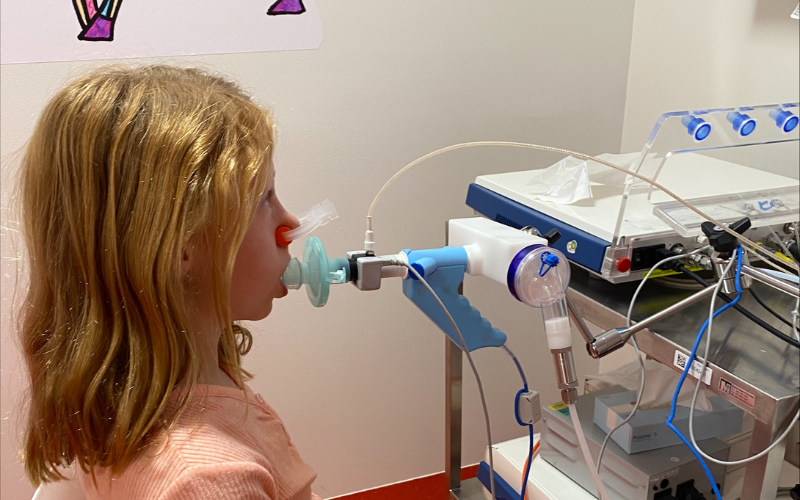
A new research project – the WA Paediatric Bronchiectasis Cohort Study – officially commenced this month with the aim of looking at children with bronchiectasis in Western Australia, like nine-year-old Holly (pictured), to better understand how this disease develops during childhood.
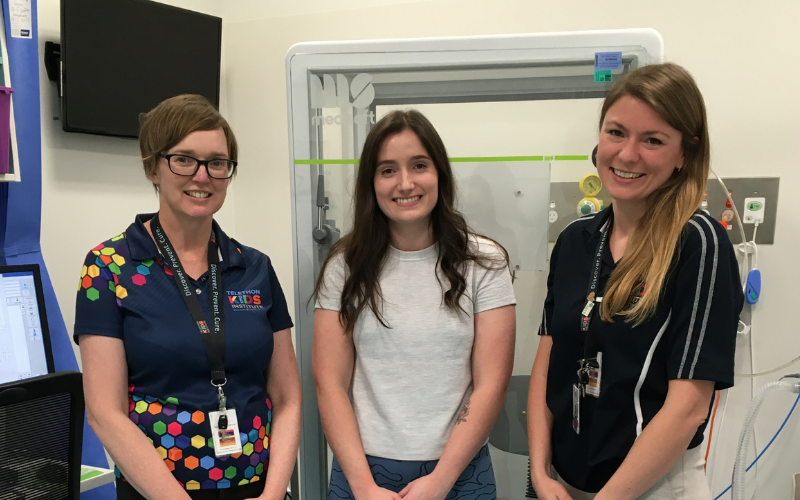
A study which set out to determine ways to predict the long-term lung health of young adults born very preterm has shown that a childhood history of respiratory hospital admission should be a key consideration in the management of preterm children and adults.
Gastrostomy assisted the management of feeding difficulties and poor weight gain, and was acceptable to families
This paper demonstrated that the evolution of sleep problems differed between subgroups of girls and women with Rett syndrome, in part explained by age and...
This study investigated the nature and prevalence of atypical pain responses in Rett syndrome and their relationships with specific MECP2 mutations.