
Search
Gambling disorder has emerged as a significant public health issue in Australia. Men are more likely than women to gamble and to develop gambling disorder. This study aimed predict men’s problem gambling severity using a multivariate approach comprised of different indicators of psychosocial functioning, past gambling behavior, and demographics (age and socioeconomic disadvantage).
The objective of this scoping review is to understand the nature of the published evidence on housing suitability, affordability, insecurity, and homelessness in relation to physical and mental health, domestic violence, and health service use among Indigenous people in high-income countries.
Stigma and self-stigma reduce self-esteem and increase hopelessness and suicidality. While psychotic disorders are widely recognized as the most stigmatizing of all mental health disorders, there is a dearth of research investigating how stigma and self-stigma are experienced by young people at ultra-high risk (UHR) for psychosis.
Climate change is both an environmental crisis and a growing source of psychological distress for young people, calling for responses that nurture emotional resilience and collective engagement. The emerging response to climate distress has mainly focused on formal psychological and individual-level interventions.
Cognitive theories contend that attentional bias to negative information contributes to elevated trait anxiety. However, research in this area has been hindered by the lack of a standardized assessment task that demonstrates the required qualities, including strong internal consistency and ecological validity. The present study aimed to develop and validate the Talking Heads Attentional Bias Assessment Task, an easy-to-implement measure that overcomes the limitations of previous attentional bias assessment tasks.
Paediatric burn injuries are a global health concern with long-term health consequences, such as psychological, immune, and cardiovascular complications, that can persist even after non-severe injuries. Emerging evidence suggests that biological sex may influence post-burn outcomes in children, as female burn survivors have been shown to experience higher mortality, scarring, anxiety, depression, and poorer quality of life compared to males.
Parental severe mental illnesses (SMIs), including schizophrenia, bipolar disorder, and major depressive disorder (MDD), can impact children's well-being, yet existing meta-analyses are limited in scope and methodology and do not comprehensively assess cognitive and academic performance in offspring across SMIs.
Social anxiety, peer victimisation, and social support are key issues during mid-childhood that provide important influence in the later adolescent years. While extensive research has evaluated these constructs in isolation and during adolescence, almost no longitudinal studies have evaluated relationships between them during mid-childhood.
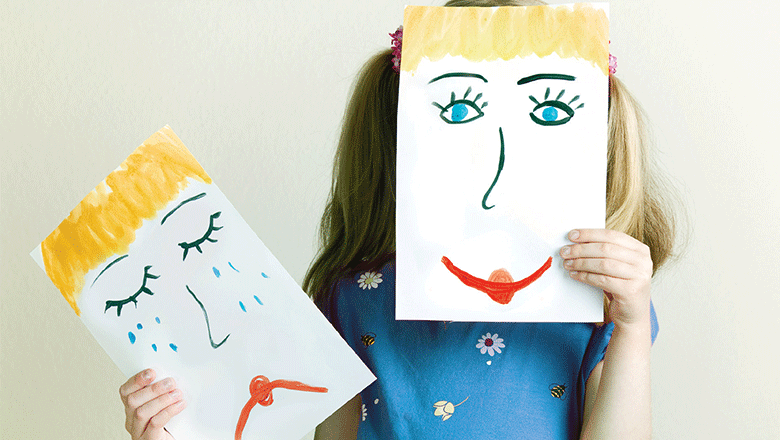
Researchers at The Kids Research Institute Australia hope data obtained from the 2nd Australian wide survey of child and adolescent mental health will help government
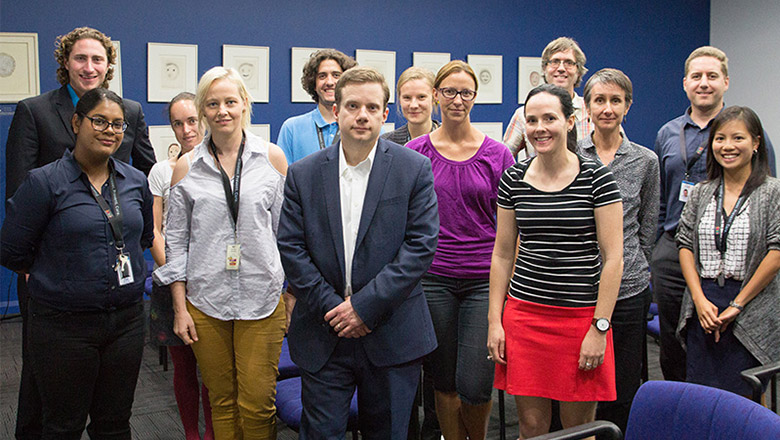
The Kids Research Institute Australia welcomed Dr Paul Croarkin from the Mayo Clinic in the US to share his work on understanding and treating depression in young people.