
Search
This lived experience-led scoping review explores the evidence base related to eating disorders/disordered eating behaviours in Autistic trans and gender diverse (TGD) people. This review highlights the currently available data on eating disorder prevalence rates, comparisons with allistic and cisgender groups, drivers and maintenance factors, the relationship between eating disorders and gender-affirming medical care, and treatment outcomes in this population.
Transgender and gender diverse (“trans”) people are more likely to experience adverse mental health outcomes due to the social adversities that are commonly experienced. One ameliorating factor for poor mental health outcomes can be connection to community, often facilitated in online spaces such as TikTok.
Non-suicidal self-injury (NSSI) is particularly common among trans young people. NSSI is most commonly used as an emotion regulation strategy, which may explain the high prevalence of the behavior among trans young people, who often experience unique stressors. In the current study we test an application of the Pantheoretical Framework of Dehumanization, in which transphobic experiences, body surveillance, body dissatisfaction, and gender dysphoria are all theorized to predict NSSI.
LGBTQA+ individuals are at increased risk of experiencing psychosis and face barriers in accessing appropriate and timely mental health support. This scoping review maps the existing literature to identify barriers and facilitators to access and engagement to care for LGBTQA+ people across the psychosis spectrum.
Parents of trans and gender diverse (herein ‘trans’) children experience additional challenges in their parenting role relative to parents of cisgender children. Understanding and enhancing parents’ empowerment is a promising approach to support both parents and children. We aimed to develop an empowerment scale specific to parents of trans children, grounded in parents’ lived experiences.
Standardised psychometric measures are used in mental health care and research settings to identify risk, assist diagnosis, and assess symptom severity. Standardised scoring of these measures involves transforming respondents' raw scores using binary sex norms. However, scoring manuals offer no guidance as to appropriate scoring methods for trans and non-binary respondents.
Citation: Passmore H. Neurodiversity (in)Justice: Learnings for Australia from international approaches to supporting neurodivergent people in
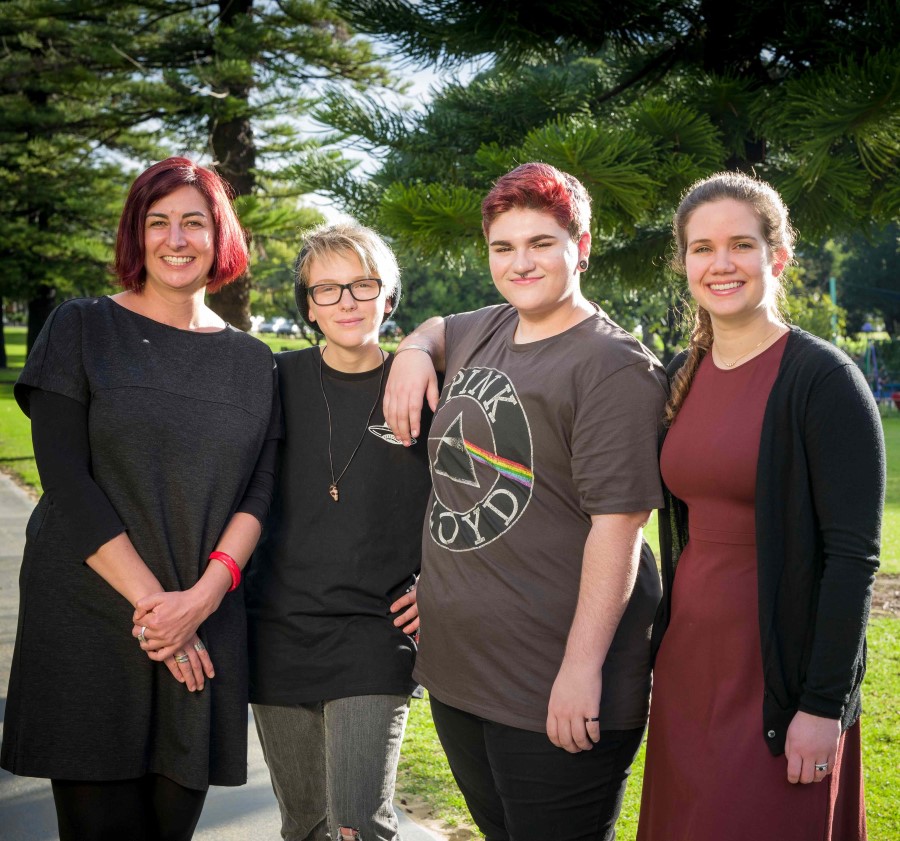
A ground-breaking survey by The Kids researchers has become the new reference point to guide policy change and educate health providers to better support trans and gender-diverse youth in Australia.

When Trans Pathways ambassador Drew, 17, came out as trans three years ago, the biggest hurdle for him was the availability of services and the time it took to access support.

Raising a child in one gender and then having them identify as another at any stage in their life can be difficult for a parent to understand and is not always an easy shift for a parent to make.