
Search

A new research project aims to demonstrate how influenza vaccination in children could be a highly cost-effective health care intervention in Australia.
Children with chronic medical diseases are at an unacceptable risk of hospitalisation and death from influenza and SARS-CoV-2 infections. Over the past two decades, behavioural scientists have learnt how to design non-coercive 'nudge' interventions to encourage positive health behaviours. Our study aims to evaluate the impact of multicomponent nudge interventions on the uptake of COVID-19 and influenza vaccines in medically at-risk children.
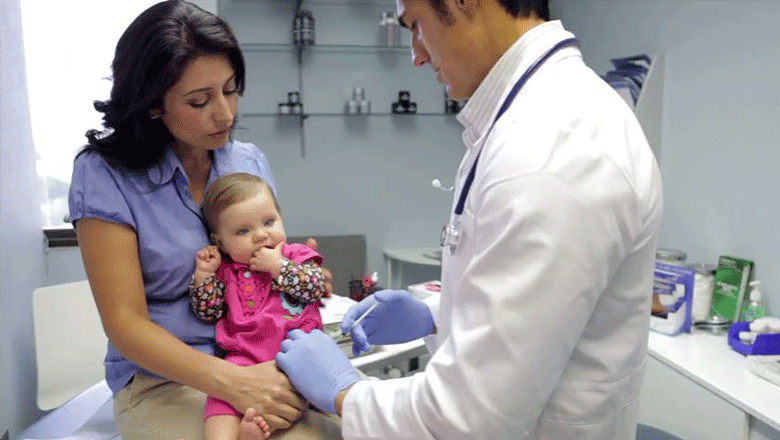
It's that time of year again... Flu vaccine time! Watch Dr Chris Blyth answer commonly asked questions in the video below.

Babies worldwide could have access to life-saving influenza vaccinations from just eight weeks of age thanks to researchers at The Kids Research Institute Australia and the generous support of the Telethon community.
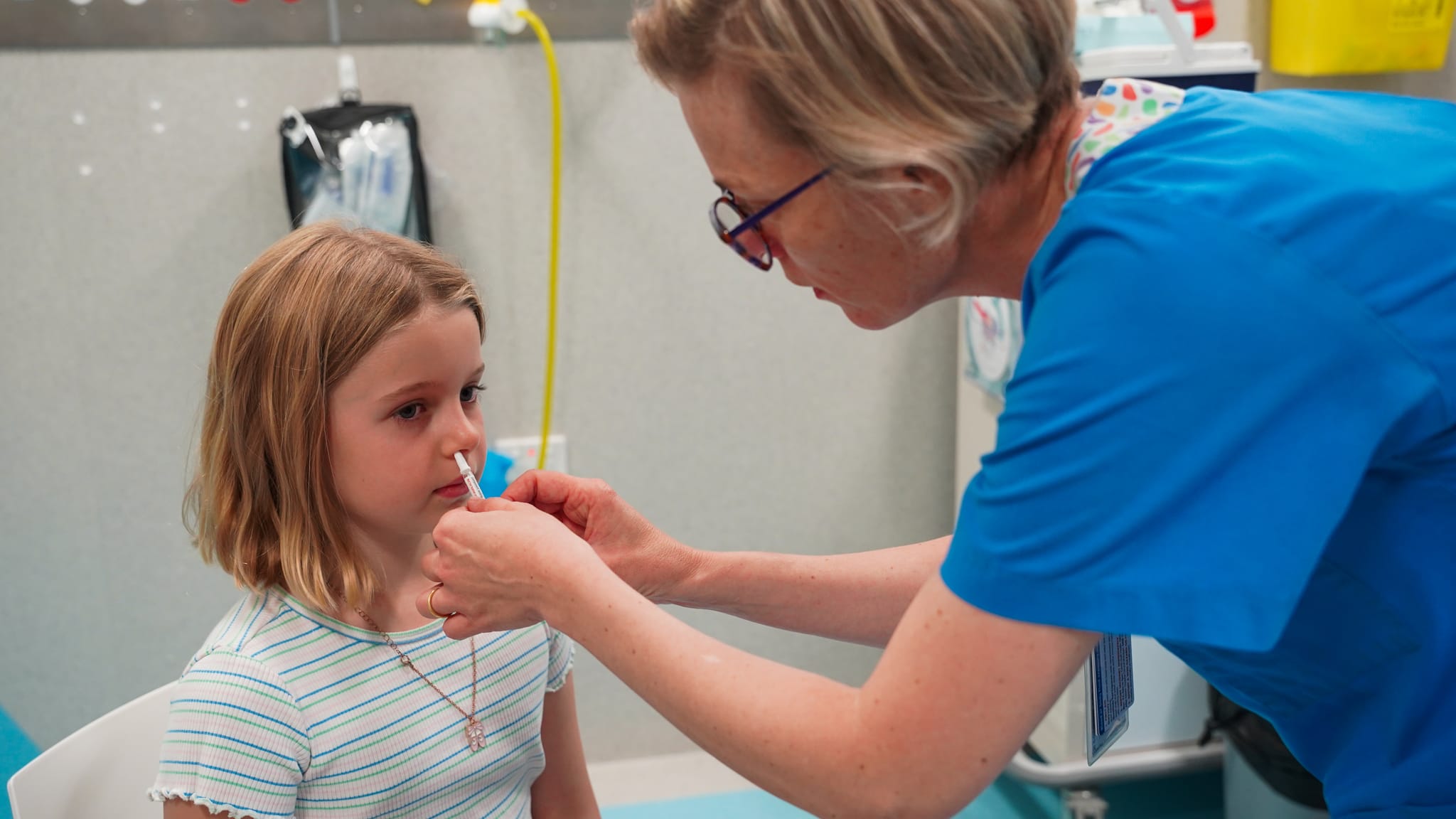
Influenza (commonly known as the flu) is caused by a highly contagious virus spread mainly through coughing and sneezing. An annual flu vaccination is the most effective way to prevent flu outbreaks.

More children across Australia are being vaccinated against the flu since funding was expanded and access widened under the National Immunisation Program
Influenza vaccine effectiveness and immunogenicity can be compromised with repeated vaccination. We assessed immunological markers in a cohort of healthcare workers (HCW) from six public hospitals around Australia during 2020-2021.
Respiratory Syncytial Virus (RSV) causes a significant burden of illness for children under 2 years of age. Nirsevimab, a long-acting monoclonal antibody, was registered for RSV prevention in Australia in 2023. In April 2024, Western Australia (WA) launched the country's first state-wide nirsevimab program for all infants and high-risk children entering their second RSV season.
COVID-19 related non-pharmaceutical interventions (NPIs) disrupted global healthcare utilisation, with notable declines in infection related paediatric hospitalisations. We aimed to identify non-infectious paediatric conditions for which the incidence of hospital admissions increased during the introduction and alleviation of NPIs in 2020.
Socio-economic inequality and vaccination inequity have long been critical issues. However, no studies have explored the gap in influenza vaccination uptake between public and private schools. Importantly, the extent to which socio-economic inequality translates into vaccination uptake inequity has not been quantified.