
Search
Aveni Liz Haynes Davis BA (Hons), MBBChir, MA (Cantab), PhD MBBS FRACP PhD Principal Research Fellow Co-director of Children’s Diabetes Centre
Liz Prue Davis Hart MBBS FRACP PhD BSc (Hons) MSc PhD Co-director of Children’s Diabetes Centre Honorary Research Fellow prue.hart@thekids.org.au
Islet autoantibodies herald early type 1 diabetes. However, less is known of the evolution of autoantibodies to the islet autoantigen ZnT8. Our primary aim was to characterise the development of islet autoantibodies in a pregnancy-birth at-risk cohort and to provide new knowledge about ZnT8A.
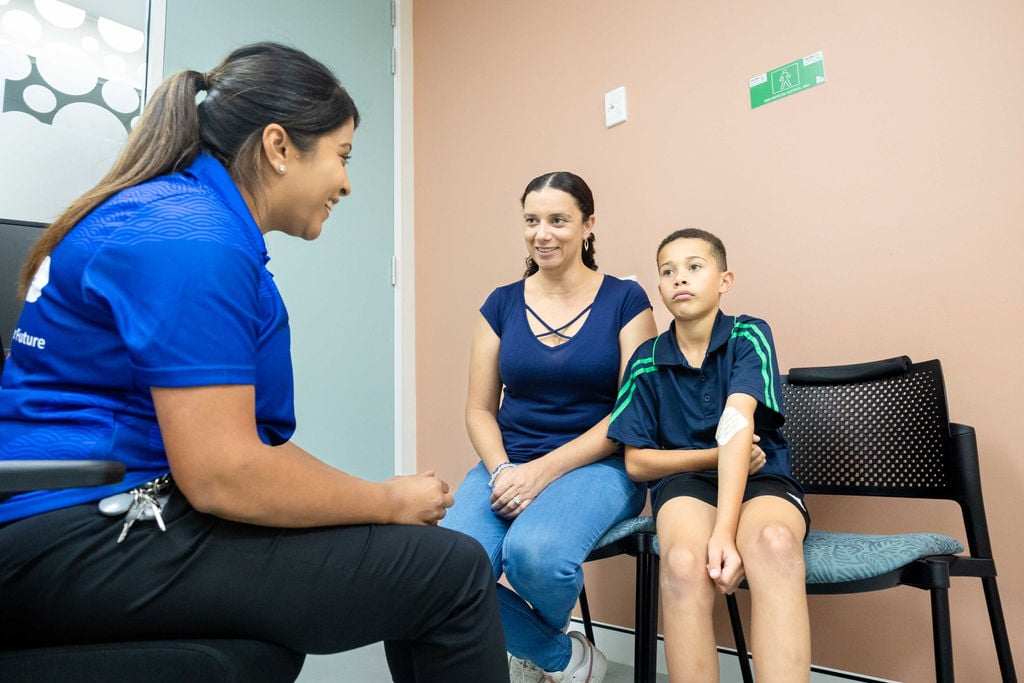
Children with early-stage (pre-symptomatic) type 1 diabetes are currently identified primarily via research-based screening programmes in Australia. Once identified, families live with the knowledge that their child has an increased chance of developing symptomatic, lifelong, insulin-requiring type 1 diabetes but have no specific clinical pathway available to them in Western Australia for accessing tailored support or education. This project aimed to co-design a new clinical pathway to address this unmet need.
A main challenge identified by youth during exercise and sport is the lack of knowledge and awareness around type 1 diabetes (T1D) particularly in community sport settings. Working with youth living with T1D, parents and community sport coaches, our team has developed resources for the T1D and sporting community. This study was to evaluate the acceptability and usability of the resources.
To explore patterns of parafunction, and bruxism, and its relationships with genotype and snoring in individuals with Rett syndrome.
Developmental and epileptic encephalopathies (DEE) are rare, often monogenic neurodevelopmental conditions. Most affected individuals have refractory seizures. All have multiple severe impairments which can be as life-limiting as or more limiting than the seizures themselves. Mechanism- and gene-targeted therapies for these individually rare, genetic conditions hold hope for treatment, amelioration of disease expression, and even cure.
Existing clinical tools that measure non-seizure outcomes lack the range and granularity needed to capture skills in developmental and epileptic encephalopathy (DEE)-affected individuals who also fall in the severe to profound range of intellectual disability. This effectively excludes those with severe impairments from clinical trials, impeding the ability of sponsors to evaluate disease-modifying therapies.
CDKL5 deficiency disorder presents as a challenging condition with early-onset refractory seizures, severe developmental delays, and a range of other neurological symptoms. Our study aimed to explore the benefits and side effects of anti-seizure medications in managing seizures among individuals with CDKL5 deficiency disorder, drawing on data from the International CDKL5 Disorder Database.
ORIGINS has several sub-projects exploring allergy development within the cohort, with a focus on respiratory conditions such as asthma and nutritional strategies for allergy prevention.