
Search
Showing results for "early life"

Western Australian researchers advocate for a national newborn screening program for congenital CMV to prevent hearing loss and related disabilities in infants.
Deborah Lehmann AO, MBBS, MSc Honorary Emeritus Fellow Honorary Emeritus Fellow Clinical Associate Professor Deborah Lehmann is a medical
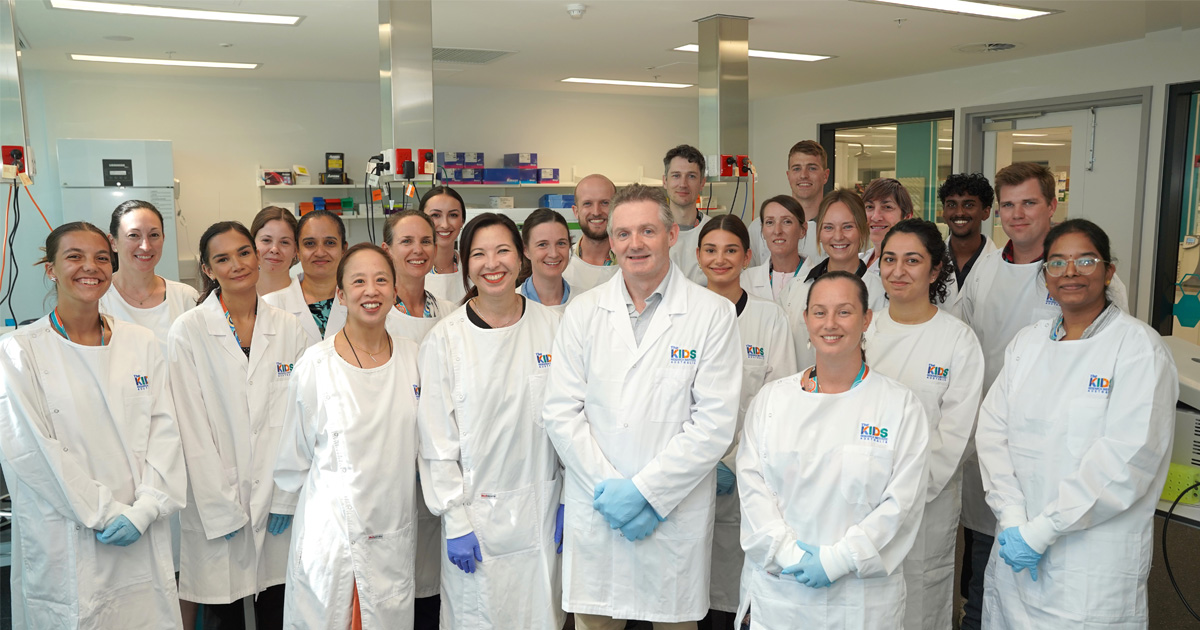
At The Kids Research Institute Australia, our Brain Tumour Research team is leading the charge to change the story for children diagnosed with brain cancer by working on safer, more effective treatments.
Burn injuries are common and often life-threatening trauma. With this trauma comes an interruption of normal hemostasis, with distinct impacts on platelets.
The aim of this study was to describe clinical characteristics, outcomes and causes of microcephaly in children whose condition was identified within the first year of life.
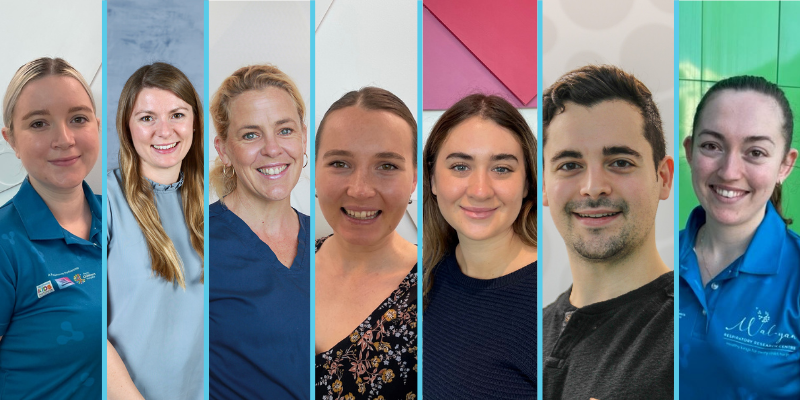
A large contingent of researchers from the Wal-yan Respiratory Research Centre are heading to Spain in September to participate in the European Respiratory Society (ERS) International Congress – the largest respiratory meeting in the world.
Gastrostomy is increasingly used in multiple neurological conditions associated with intellectual disability, with no apparent accessibility barriers
The social media application TikTok allows users to view and upload short-form videos. Recent evidence suggests it has significant potential for both industry and health promoters to influence public health behaviours. This protocol describes a standardised, replicable process for investigations that can be tailored to various areas of research interest, allowing comparison of content and features across public health topics.
Medulloblastoma (MB) consists of four core molecular subgroups with distinct clinical features and prognoses. Treatment consists of surgery, followed by radiotherapy and cytotoxic chemotherapy. Despite this intensive approach, outcome remains dismal for patients with certain subtypes of MB, namely, MYC-amplified Group 3 and TP53-mutated SHH. Using high-throughput assays, six human MB cell lines were screened against a library of 3208 unique compounds. We identified 45 effective compounds from the screen and found that cell cycle checkpoint kinase (CHK1/2) inhibition synergistically enhanced the cytotoxic activity of clinically used chemotherapeutics cyclophosphamide, cisplatin, and gemcitabine.
Glioblastoma in adults, and medulloblastoma and pineoblastoma that mainly affect children, are aggressive brain tumors.