
Search
Showing results for "early life"
Pediatric anesthesiology has been greatly impacted by COVID-19 in the delivery of care to patients and to the individual providers. With this study, we sought to survey pediatric centers and highlight the variations in care related to perioperative medicine during the COVID-19 pandemic, including the availability of protective equipment, the practice of pediatric anesthesia, and economic impact.

Healthy skin is a vital factor in the fight against life-threatening conditions like sepsis, heart disease and kidney disease, all of which can be caused by the bacteria Strep A.
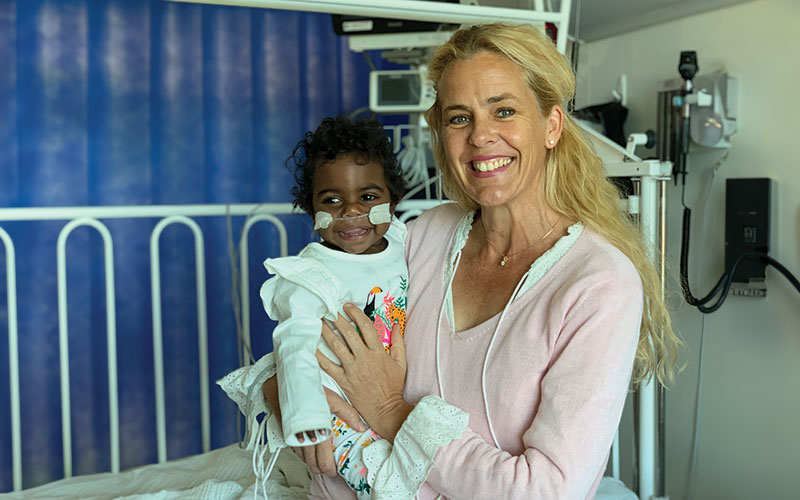
Culturally secure intervention to facilitate medical follow up for Aboriginal children, after being hospitalised with chest infections, have proven to improve long-term lung health outcomes.
Although clinical trials are fundamental to advancing evidence-based practice, significant heterogeneity in outcome reporting poses a considerable challenge to the validity of systematic reviews. This inconsistency impedes the ability to compare, synthesise and interpret research findings effectively. In the field of paediatric airway management, this issue is particularly relevant because of the low incidence of critical events and the related high morbidity and mortality. The issue of inadequate and variable outcome reporting in clinical trials has been widely acknowledged, necessitating initiatives to enhance the quality of future research.
Peri-operative respiratory adverse events remain a major cause of morbidity and mortality in children undergoing general anaesthesia; those with asthma are at higher risk. The aim of this feasibility study was to determine whether pre-operative measurements of fractional exhaled nitric oxide and the forced oscillation technique are feasible in children, and to explore whether these measurements can predict peri-operative respiratory adverse events.
Young children are increasingly exposed to evolving screen technology. International guidelines recommend no screen use for children under the age of 2 years, due to the potential for detrimental effects on behaviour and development. However, evidence for these guidelines is limited by inadequate consideration of device-specific effects (TV and mobile phone/tablet computer), maternal screen use, confounders such as maternal mental health and importance of effect sizes.
Little evidence exists on the postoperative trajectory after paediatric orthopaedic surgery. Pain and behavioural disturbance can have short- and long-term impacts on children and their families. An improved understanding of procedure-specific postoperative trajectories can enhance recovery. The primary outcome was to examine the duration and severity of postoperative pain experienced by children undergoing 10 commonly performed orthopaedic procedures.
Pain is a common experience associated with healthcare for children, who often recall it as the worst part of hospitalisation. Several factors make assessment of pain more challenging in children. Families have previously identified the development of improved tools to assess pain in children as a key priority. We therefore sough to investigate the nature of this experience from the perspective of children and their parents to inform the development of such tools.
Processed electroencephalography (EEG) indices used to guide anesthetic dosing in adults are not validated in young infants. Raw EEG can be processed mathematically, yielding quantitative EEG parameters (qEEG). We hypothesized that machine learning combined with qEEG can accurately classify expired sevoflurane concentrations in young infants. Knowledge from this may contribute to development of future infant-specific EEG algorithms.
The clinical consequences of an antibiotic allergy label are detrimental, impacting health care delivery and patient outcomes. We assessed hospital inpatients with intent to offer free antibiotic allergy labeling assessment within a randomized controlled trial. We sought to determine the feasibility of establishing an adult antibiotic allergy delabeling service in a Western Australian tertiary public hospital.