
Search

The Centre is currently involved in an international effort to develop revolutionary closed- loop 'artificial pancreas' technology. It is also leading a multi-centre Australian trial of these portable devices at home in young people with diabetes.
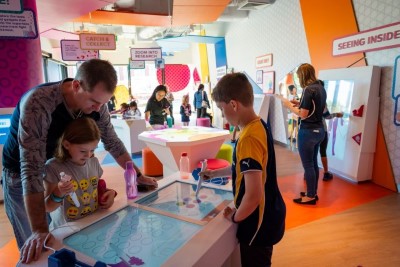
Beat the heat these school holidays by visiting the The Kids Discovery Centre.v

The advancement of technology to assist the daily routine of diabetes is extremely helpful. However, it is important to create clear boundaries in the use of technology. Our social work team have some great tips to set up healthy routines.

Mobile phones are an important part of diabetes management but its also important to set some family rules for your child's technology use.
Type 1 diabetes (T1D) is a chronic and incurable autoimmune disease, diagnosed in early childhood and managed initially in paediatric healthcare services. In many countries, including Australia, national audit data suggest that management and care of T1D, and consequently glycaemic control, are consistently poor.
Liz Davis MBBS FRACP PhD Co-director of Children’s Diabetes Centre Co-director of Children’s Diabetes Centre Professor Davis is a paediatric
Continuous glucose monitoring systems are used in therapeutic decisions for diabetes management, however, the impact of body composition on CGM accuracy is not known. Body composition variables were collected in an observational study designed to determine the accuracy of an investigational Medtronic Guardian™ sensor 3.
In Australia, Aboriginal children experience disproportionate rates of type 2 diabetes (T2D) compared with non-Aboriginal children. The aim of this qualitative study was to explore the experiences of Aboriginal adolescents with T2D and their family members to better understand the influences of T2D on self-management, with findings used to inform an enhanced service model of care.
To explore the impact of missing data on the accuracy of continuous glucose monitoring (CGM) metrics collected for a 2-week period in a clinical trial.
To determine the incidence and incidence trends over 2001-2022 of childhood-onset type 1 diabetes (T1D) in Western Australia and assess the impact of the COVID-19 pandemic.