
Search
Showing results for "early life"

The teenage years can be a challenging time for families, a period made even more difficult if a child has type 1 diabetes.
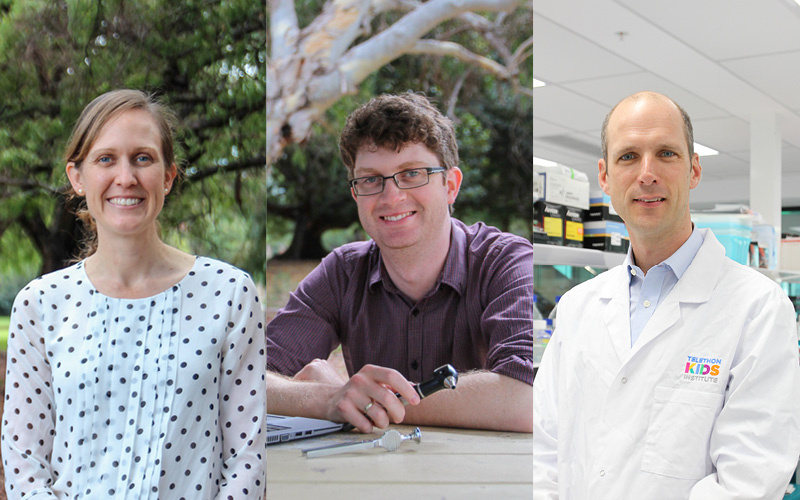
Three The Kids researchers have been named amongst WA’s most outstanding young scientists for their efforts to ensure kids around the country have the chance to lead happy and healthy lives.

Dr Asha Bowen, Head of Skin Health at the Wesfarmers Centre of Vaccines and Infectious Diseases, has been awarded a 2018 Fellowship as part of the prestigious L’Oréal-UNESCO Women in Science program.

Perth’s The Kids Research Institute Australia has welcomed the McGowan Government’s call today for the immediate implementation of mandatory pregnancy health warning labels.
Research has shown that vitamin D levels can have an impact on many aspects of a child's health, including lung growth, language development and eating patterns
The study is the first of its kind to track language delay from two years of age through to late adolescence, using data collected from the long running Raine
The COVID-19 pandemic has impacted new mothers’ wellbeing and breastfeeding experience. Women have experienced changes in birth and postnatal care and restricted access to their support network. It is unclear how these impacts may have changed over time with shifting rates of infection and policies restricting movement and access to services in Australia and New Zealand.
Children born to parents with intellectual disability (ID) have been shown as disproportionally represented in child protection services however with limited population-based research.
Introduction Grades 2 and 3 gliomas (G2/3 gliomas), when combined, are the second largest group of malignant brain tumours in adults. The outcomes for G2/3 gliomas at progression approach the dismal outcomes for glioblastoma (GBM), yet there is a paucity of trials for Australian patients with relapsed G2/3 gliomas compared with patients with GBM.
Both tumour suppressive and oncogenic functions have been reported for dual-specificity tyrosine phosphorylation-regulated kinase 1A (DYRK1A). Herein, we performed a detailed investigation to delineate the role of DYRK1A in glioblastoma. Our phosphoproteomic and mechanistic studies show that DYRK1A induces degradation of cyclin B by phosphorylating CDC23, which is necessary for the function of the anaphase-promoting complex, a ubiquitin ligase that degrades mitotic proteins.