
Search
Showing results for "early life"

Recent diabetes technology is helping 12-year-old Drina keep on top of her condition and be independent, while significantly easing the disease burden on her family.
The Kids Research Institute Australia's Human Capability Team has been asked by the Commonwealth Department of Education, Skills and Employment (DESE) to prepare a methodology and project plan to conduct a nationally-representative survey of bullying prevalence among children and young people in Years 4–10.
A student’s learning potential is limited if they do not attend school regularly.
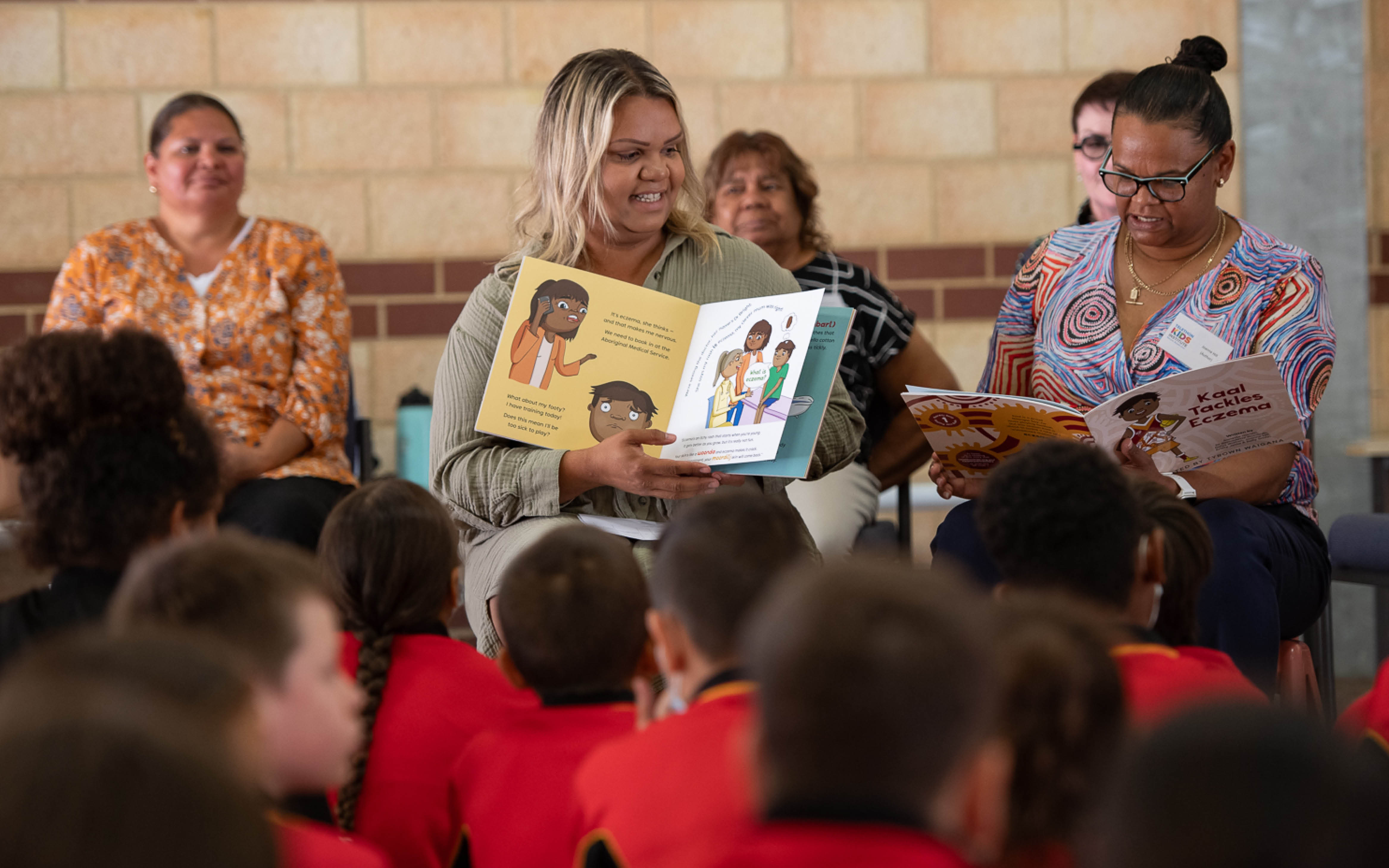
Our aim is for all kids to have healthy skin. We work with communities to reduce the burden of Strep A skin sores and sore throats to prevent rheumatic fever.
The neonatal skin is central to early survival and immune development. Far from being a passive mechanical barrier, it integrates physical, chemical, and microbial defences that together protect the infant in the immediate postnatal period. In preterm infants, structural immaturity, reduced antimicrobial capacity, and altered microbial colonisation confer heightened vulnerability to infection and inflammation.
The behavioural outcomes associated with atypical cerebral lateralization during the early stages of cognitive development is an interesting research venture. However, there are few tasks for assessing lateralization in young children. The current study describes the Magic Hat task and the Teddy Bear Picnic task, which were designed to measure the lateralization of language and visuospatial attention, respectively, in children as young as three years old.
This study uses H i image data from the Widefield ASKAP L-band Legacy All-sky Blind surveY (WALLABY) pilot survey with the Australian Square Kilometre Array Pathfinder (ASKAP) telescope, covering the Hydra cluster out to 2.5r 200. We present the projected phase-space distribution of H i-detected galaxies in Hydra, and identify that nearly two-thirds of the galaxies within 1.25r200 may be in the early stages of ram pressure stripping.
Interparental conflict (IPC) has the potential to adversely affect children's social, emotional, and behavioural functioning. The overall objective of this study was to investigate the relationship between both the severity and chronicity of IPC across early and middle childhood and children's emotional-behavioural functioning at 10-11 years. Specifically, we aimed to: (1) identify distinct trajectories of IPC spanning 10-11 years since birth of the study child as reported by mothers, and (2) examine the emotional-behavioural functioning of children exposed to the identified IPC trajectories.
Comprehensive scores incorporating clinical, lung function, imaging and laboratory data will become essential in the future for predicting disease progression and for use in clinical trials
Hair segment analyses revealed longer-term increased levels of cortisol in the past 3 months in early mental health problems