
Search
Showing results for "early life"

The Kids Research Institute Australia has an ongoing commitment to the development of our people, and our award-winning Emerging Leaders Program aims to foster the next generation of Institute leaders.
In this study, the Australian Early Development Census scores of 19,203 children were linked to information on child maltreatment allegations.
We aimed to assess perceived stress and influencing factors in mothers with children at risk of type 1 diabetes and coeliac disease who did, or did not, develop islet autoantibodies or coeliac autoantibodies by 4 years of age.
Globally, nearly 9 million people are living with type 1 diabetes (T1D). Although the incidence of T1D is not affected by socioeconomic status, the development of complications and limited access to modern therapy is overrepresented in vulnerable populations. Diabetes technology, specifically continuous glucose monitoring and automated insulin delivery systems, are considered the gold standard for management of T1D, yet access to these technologies varies widely across countries and regions, and varies widely even within high-income countries.
This cohort study examines whether there is a temporal association between SARS-CoV-2 infection and the development of islet autoimmunity among Australian children with a first-degree relative with type 1 diabetes.
Tasmania's Child and Family Centres are having a positive impact on parent's use and experiences of services and supports for young children
The rapid increase in the number of children diagnosed with autism spectrum disorders (ASD) in Western Australia reflects changes to diagnostic practices
To characterise small-area geographical variation in the prevalence of diabetes in Australian youth. A combined statistical reconstruction and small-area estimation algorithm was applied to privacy-modulated data from the 2021 Australian Census.
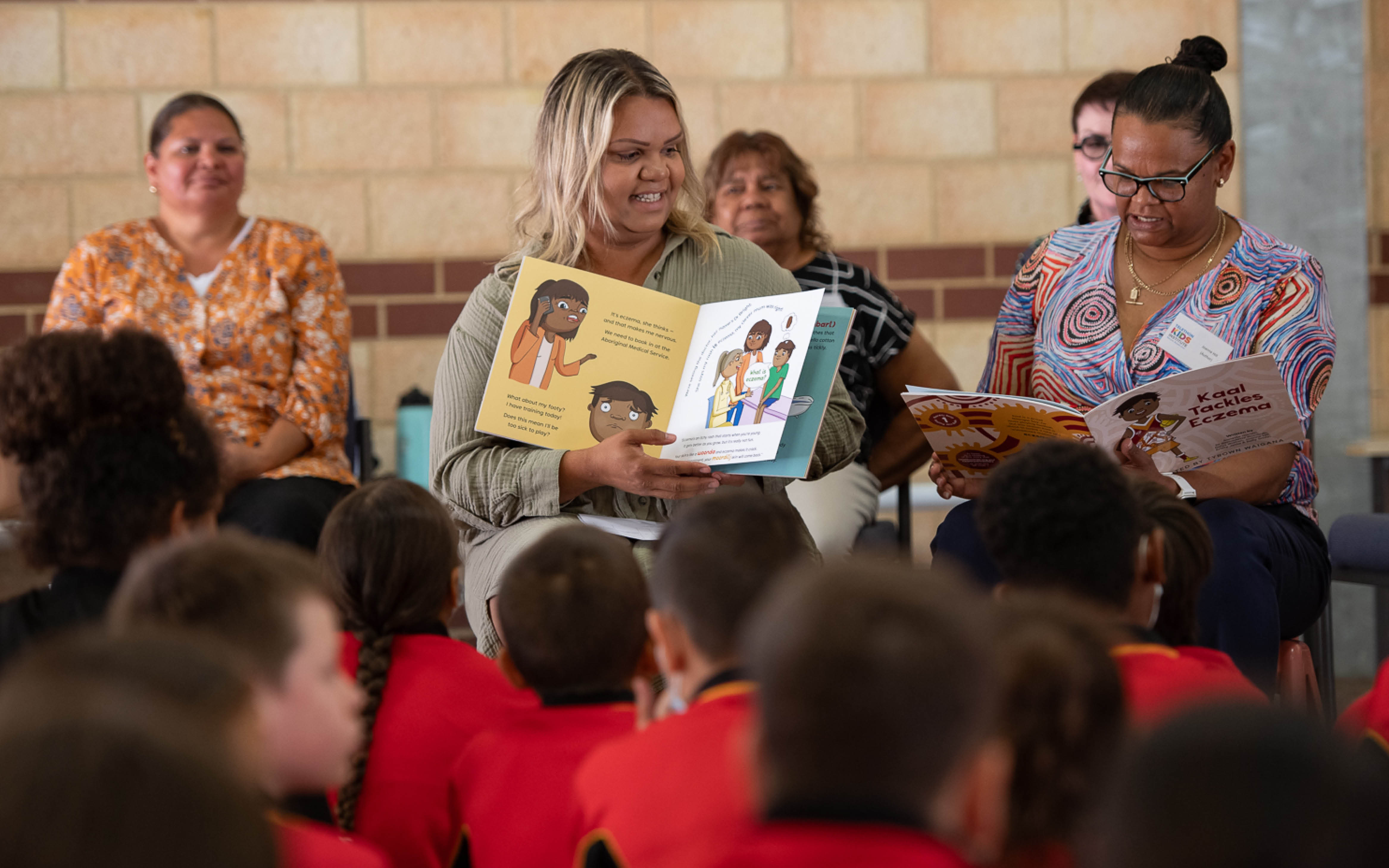
Our aim is for all kids to have healthy skin. We work with communities to reduce the burden of Strep A skin sores and sore throats to prevent rheumatic fever.
This project aims to explore how Australian children spend their time over an extended and important period of their lives (from birth to 16/17 years old) and how such time allocation contributes to their development outcomes.