
Search
Showing results for "early life"
Receptive vocabulary development is a component of the human language system that emerges in the first year of life and is characterised by onward expansion...

Oliver Bowman is too young to understand the enormity of having type 1 diabetes but his young parents Brooke and Aidan know all too well the reality of having a child with a chronic disease.
We review what is known about the diversity, life histories, host-parasite interactions and evolutionary relationships of trypanosomes in Australian wildlife

Researchers from The Kids Research Institute Australia say the Federal Government’s in-principle commitment to cover the cost of stillbirth autopsies is a positive step forward in addressing the nation’s stagnating rates.
There remains a general misconception that the immune status of the fetus and neonate is immature or insufficient. However, emerging research in immune ontogeny prompts reconsideration of this orthodoxy, reframing this period instead as one of unique opportunity. Vaccine responses (qualitative and quantitative) vary between individuals, and across demographic cohorts. Elements of baseline immune status and function predict vaccine response - some of these factors are well described, others remain a subject of ongoing research, especially with the rapidly expanding field of 'omics' research, enabled by development of highly granular immune profiling techniques and increasing computational capacity.

Congratulations to Associate Professor Rebecca Glauert, Head of the Developmental Pathways and Social Policy Team at The Kids Research Institute Australia and an internationally recognised expert in data linkage.
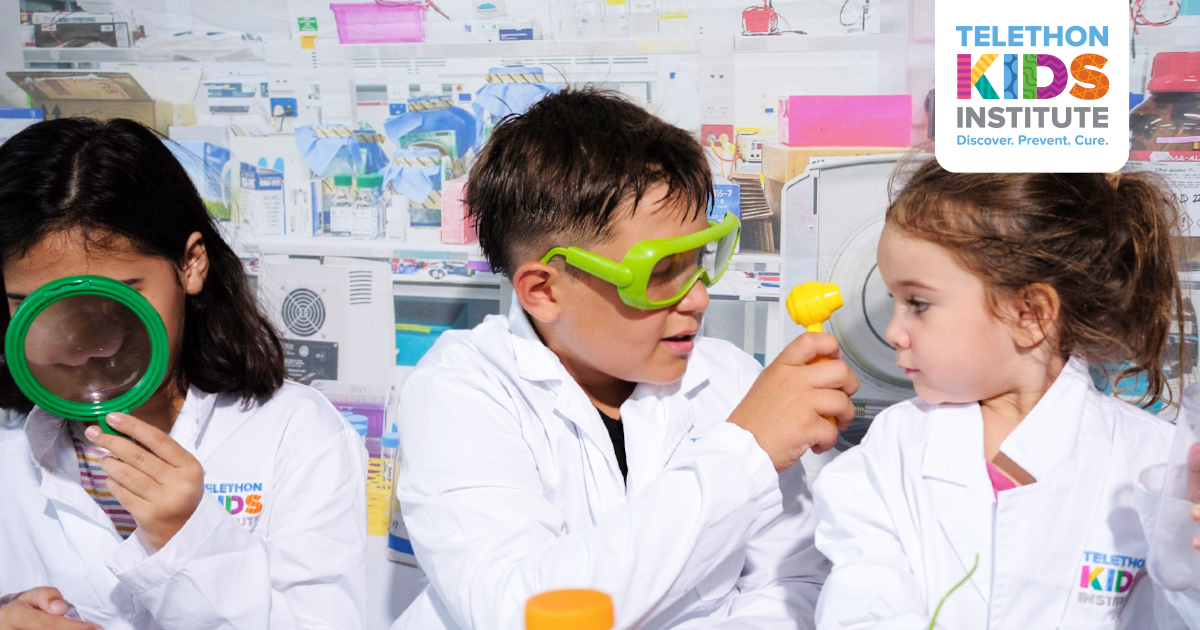
The Kids Research Institute Australia is bringing science to the Kimberley, with a series of free activities for children and families in Broome in the leadup to National Science Week.
Neonates have heightened susceptibility to infections. The biological mechanisms are incompletely understood but thought to be related to age-specific adaptations in immunity due to resource constraints during immune system development and growth. We present here an extended analysis of our proteomics study of peripheral blood-plasma from a study of healthy full-term newborns delivered vaginally, collected at the day of birth and on day of life (DOL) 1, 3, or 7, to cover the first week of life. The plasma proteome was characterized by LC-MS using our established 96-well plate format plasma proteomics platform.
This paper is about lung disease in patients with cyctic Fibrosis and prevention strategies to slow the onset of lung disease.

The Children’s Diabetes Centre at Perth Children’s Hospital is excited to announce that we have successfully acquired limited supplies of the Dexcom G6 continuous glucose monitoring system.