
Search
Showing results for "early life"
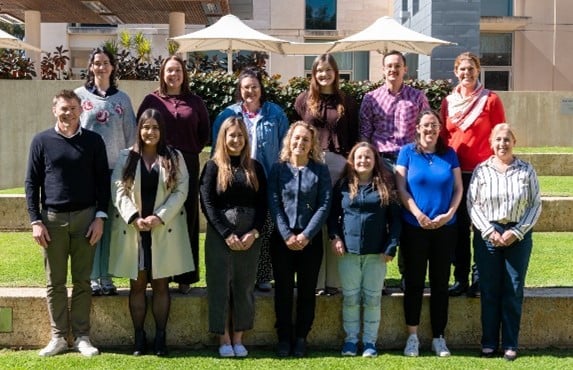
Community Involvement and Consumer Representatives are a really important part of our research. Find out what they have been working on.
Find out more about Paediatric Occupational Therapy services at CliniKids.

One third of Australia’s children will be better supported at school, thanks to a The Kids Research Institute Australia evidence review of what works best to support student behaviour needs.

The Happy Parenting Program is investigating new ways to provide support to parents with young children from an early age.
The importance of supporting parent-child interactions has been noted in the context of prodromal autism, but little consideration has been given to the possible contributing role of parental characteristics, such as psychological distress. This cross-sectional study tested models in which parent-child interaction variables mediated relations between parent characteristics and child autistic behaviour in a sample of families whose infant demonstrated early signs of autism.
An effective disease surveillance system is critical for early detection and response to disease epidemics. This study aimed to assess the capacity to manage and utilize disease surveillance data and implement an intervention to improve data analysis and use at the district level in Tanzania.
With increasing demands for health, disability and education services, innovative approaches can help distribute limited resources according to need. Despite an increased focus on support needs within the clinical pathway and policy landscape, the body of research knowledge on this topic is at a relatively early stage. However, there appears to be a sense of unmet support needs and dissatisfaction with the provision of required support following an autism diagnosis amongst caregivers of young people on the spectrum.
Parents are often expected to be the primary implementers of intervention for their young children with autism spectrum disorder (ASD). The provision of a few hours a week of intervention by a trained therapist, in addition to parent-implemented intervention, could increase child outcomes compared to parent-implemented intervention in isolation.
The developmental origins of handedness remain elusive, though very early emergence suggests individual differences manifesting in utero could play an important role. Prenatal testosterone and Vitamin D exposure are considered, yet findings and interpretations remain equivocal.
Developmental theory and previous studies support the potential value of prodromal interventions for infants at elevated likelihood of developing autism. Past research has supported the efficacy of parent-mediated prodromal therapies with infants from as early as 7 months. We outline the rationale for implementing interventions following this model from even earlier in development and report on the feasibility of a novel intervention developed following this model of parent-mediated infant interventions.