
Search
Showing results for "early life"
We collected information on a monthly basis on the patterns of seizures and medications of 162 girls in the Australian Rett Syndrome study over a calendar year.
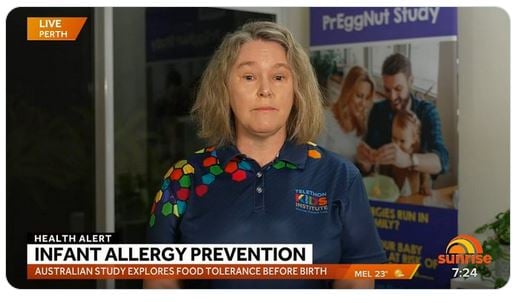
Dr Debbie Palmer spoke to Ch7 Sunrise about the changing advice for parents about the development of food allergies in kids.

ORIGINS has recently welcomed its 4,000th family into the study.
Research on the consequences of breakfast skipping among students tends to focus on academic outcomes, rather than student wellbeing or engagement at school. This study investigated the association between breakfast skipping and cognitive and emotional aspects of school engagement.
To advance active transport, robust policy-relevant evidence is needed to understand how to change behaviour and to support decision-making by policy makers and practitioners. Currently, however, priority research questions that are most critical for advancing active transport have not been identified.
Mental health and well-being during childhood and adolescence have been shown to impact on health, educational attainment and employment in adulthood.1–3 Although health and education systems worldwide have long recognized the importance of promoting student well-being,4–6 population-wide monitoring of well-being remains uncommon.
Emerging evidence supports the physical health and social benefits of dog ownership. This study examined the longitudinal effect of dog ownership and dog walking on mental health.
A large proportion of preschoolers do not meet the recommended three hours of daily physical activity. A potential source of daily physical activity could be that provided via the family dog. This qualitative study aimed to explore the barriers and motivators to preschoolers playing with their dog and participating in family dog walks.
Mild traumatic brain injury (mTBI) is a complex injury with heterogeneous physical, cognitive, emotional and functional outcomes. Many who sustain mTBI recover within 2 weeks of injury; however, approximately 10%-20% of individuals experience mTBI symptoms beyond this 'typical' recovery timeframe, known as persistent post-concussion symptoms (PPCS). Despite increasing interest in PPCS, uncertainty remains regarding its prevalence in community-based populations and the extent to which poor recovery may be identified using early predictive markers.
The aim of this study was to longitudinally assess the prevalence of allergic sensitization, asthma, eczema and hay fever from infancy to adulthood