
Search
Showing results for "early life"
This study investigated patterns of universal health and education service use from birth through Kindergarten (age 4 years) and estimated associations between cumulative risk and service use patterns, and between service use patterns and children's developmental vulnerability in the Preparatory Year (age 5 years).
Empirical evidence identifying the key drivers of positive early childhood development in Aboriginal children, and supportive features of local communities...
Intramuscular benzathine penicillin G (BPG) injections are a cornerstone of secondary prophylaxis to prevent acute rheumatic fever (ARF) and rheumatic heart disease (RHD). Uncertainties regarding inter-ethnic and preparation variability, and target exposure profiles of BPG injection are key knowledge gaps for RHD control.

Researchers from the Rio Tinto Children’s Diabetes Centre, a JDRF Global Centre of Excellence, have been awarded funding through the WA Child Research Fund (WACRF) to undertake research that aims to remove barriers and provide access to the most effective diabetes technologies for all children newly
This review summarizes what we have learned about early lung disease in children with CF and discusses the implications for clinical practice and research
Daily physical activity is critical during the early years of life for facilitating children's health and development. A large proportion of preschool children do not achieve the recommended 3 h of daily physical activity. Early childhood education and care (ECEC) services are a key setting to intervene to increase physical activity. There is a significant need for ECEC specific physical activity policy, including clearer guidelines on the amount of physical activity children should do during care, and strategies for implementation of these guidelines.
Urinary tract infection (UTI) is common in children, causes them considerable discomfort, as well as distress to parents and has a tendency to recur.
Evaluating Early Childhood Education and Care
Child health expert Fiona Stanley says effective action to break the cycle of disadvantage for Aboriginal children must begin well before they start school.
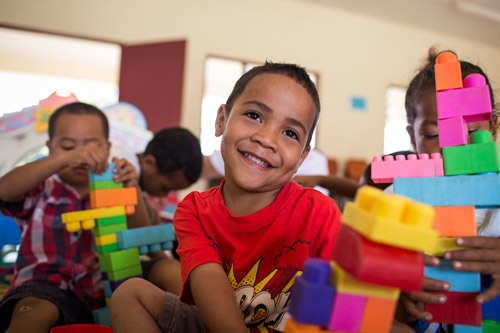
In Australia, community playgroups are seen as the ‘soft touch’. But a research project in Tonga is finding the benefits can last a lifetime.