
Search
Showing results for "early life"
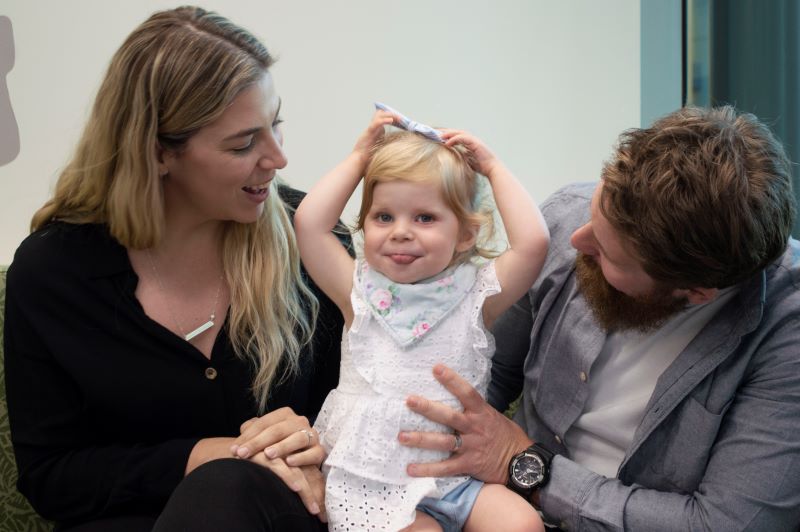
CliniKids, the first stand-alone clinical service offered by The Kids Research Institute Australia, was launched in October 2019 and is already delivering benefits for families with children who are developing differently.
Convalscent plasma (CP) was identified as a potential therapy for COVID-19 available early in the pandemic.
Type 1 interferons (T1IFNs) are typically expressed in low concentrations under homeostatic conditions, but upon pathogenic insult or perturbation of the pathway, these critical immune signaling molecules can become either protectors from or drivers of pathology. While essential for initiating antiviral defense and modulating inflammation, dysregulation of T1IFN signaling can contribute to immunopathology, making it and its associated pathways prime targets for immune evasion and disruption by pathogens.
Antibodies that target immune checkpoints such as cytotoxic T lymphocyte antigen 4, programmed cell death protein/ligand 1 are approved for treatment of multiple cancer types.
Physical literacy development in early childhood, viewed by many as the foundation for lifelong physical activity engagement, is significantly influenced by parents. Our aim was to explore parents' understanding of physical literacy and gain insight into their perspectives on physical literacy promotion.
To assess parental awareness of respiratory syncytial virus (RSV) and the level of acceptance of future RSV prevention strategies. A cross-sectional online survey was implemented targeting "future" and "current" parents of children aged ≤5 years in Australia.
Meta-analyses and single-site studies have established that children are less infectious than adults within a household when positive for ancestral SARS-CoV-2. In addition, children appear less susceptible to infection when exposed to ancestral SARS-CoV-2 within a household. The emergence of SARS-CoV-2 variants of concern (VOC) has been associated with an increased number of paediatric infections worldwide.
Physical inactivity in childhood is a major public health issue. Dog ownership has been widely reported to lead to greater physical activity in adults and school-aged children. We examined if dog ownership and dog-facilitated physical activity were associated with higher physical activity in preschoolers. Secondary analysis of the 'Play Spaces & Environments for Children's Physical Activity' (PLAYCE, 2015-2018) study involving 1366, 2-5-year-olds from 122 long day-care centres in Perth, Australia was conducted.
Introduction of subsidized CGM showed early improvement in psychosocial and glycemic outcomes in patients and their families in Western Australia
Early intensification with postinduction myeloid-type chemotherapy courses did not significantly improve outcome for infant acute lymphoblastic leukemia