
Search
Everything you need to know to book tickets to our upcoming school holiday workshops in July held at Scitech!
Register your interest to participate in a FREE pilot excursion for our brand-new program, Microscopic World!
Everything you need to know to book tickets to our upcoming school holiday workshops in April held at Scitech!

Keep up to date with all things Discovery Centre related by signing up to the Discovery Club. You’ll be able to log in with all your information at the centre!
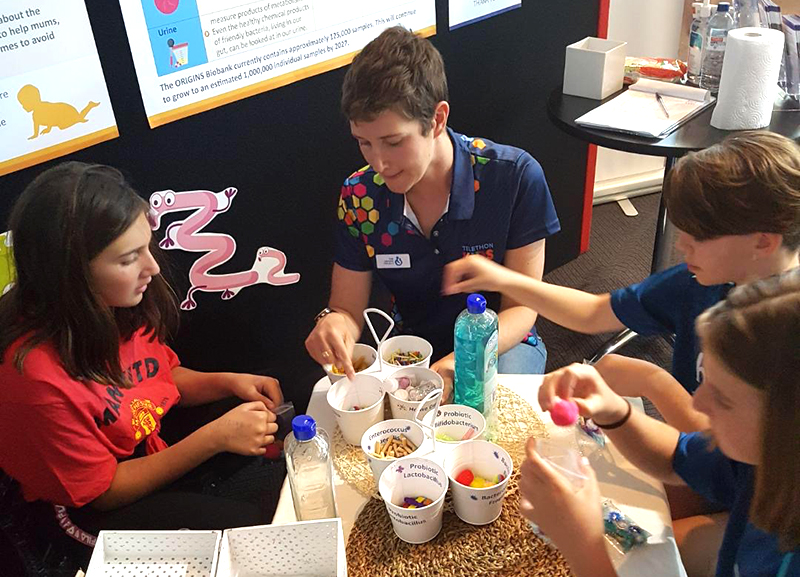
Make your very own unique microbiome using a range of textured items designed to be squeezed and squished.
Cellulitis is an acute bacterial infection of the dermis and subcutaneous tissue usually found complicating a wound, ulcer, or dermatosis. This article provides guidelines for the surveillance of cellulitis.
Benzathine penicillin G is the cornerstone of secondary prophylaxis to prevent Streptococcus pyogenes infections, which precede acute rheumatic fever.
Parents are often expected to be the primary implementers of intervention for their young children with autism spectrum disorder (ASD). The provision of a few hours a week of intervention by a trained therapist, in addition to parent-implemented intervention, could increase child outcomes compared to parent-implemented intervention in isolation.
The breadth of available non-pharmacological interventions for autistic children, with varying evidence for efficacy summarised in multiple systematic reviews, creates challenges for parents, practitioners, and policymakers in navigating the research evidence. In this article, we report the findings of an umbrella review of 58 systematic reviews of non-pharmacological interventions for autistic children (aged 0–12 years).