
Search
Showing results for "early life"
In this review, we consider recent evidence regarding hypoxia and sterile inflammation in cystic fibrosis airways
In 2024, the government of Western Australia introduced 'nirsevimab', a monoclonal antibody offering protection from respiratory syncytial virus (RSV), for eligible infants. This study explores why parents of infants who were eligible to receive nirsevimab opted to decline or delay the immunisation.
The concept of ultra-high risk for psychosis (UHR) has been at the forefront of psychiatric research for several decades, with the ultimate goal of preventing the onset of psychotic disorder in high-risk individuals. Orygen (Melbourne, Australia) has led a range of observational and intervention studies in this clinical population.
Children far in advance of pubertal development may be deferred from further assessment for gender-affirming medical treatment until nearer puberty. It is vital that returning peripubertal patients are seen promptly to ensure time-sensitive assessment and provision of puberty suppression treatment where appropriate.
Multimodal modeling that combines biological and clinical data shows promise in predicting transition to psychosis in individuals who are at ultra-high risk. Individuals who transition to psychosis are known to have deficits at baseline in cognitive function and reductions in gray matter volume in multiple brain regions identified by magnetic resonance imaging.
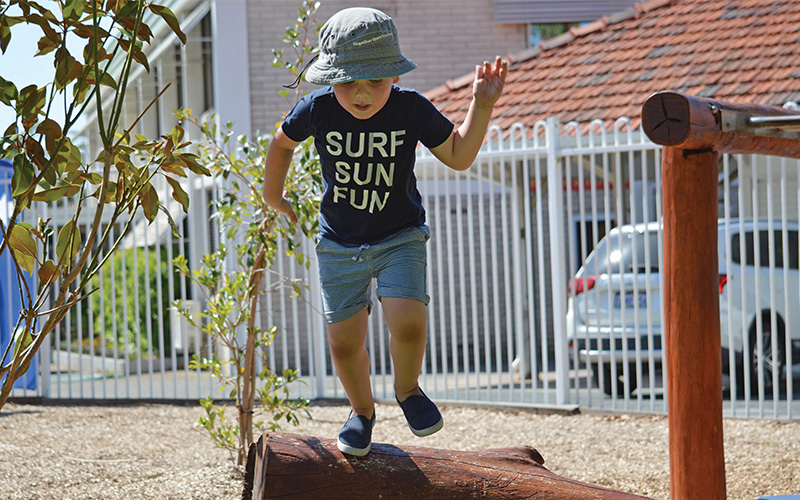
The Kids Research Institute Australia Government Relations Advisor Fiona Roche said the BEACHES project was a great example of how the Institute is increasingly working in partnership with Government
Aboriginal and Torres Strait Islander Peoples are custodians of one of the oldest living societies; however, the continued impact of colonisation has led to profound trauma and loss which has spanned generations.
High-grade gliomas including glioblastoma (GBM) and diffuse midline gliomas (DMG) represent the most lethal and aggressive brain cancers where current treatment modalities offer limited efficacy. Chimeric antigen receptor (CAR) T cell therapies have emerged as a promising strategy, boasting tumor-specific targeting and the unique ability to penetrate the blood-brain barrier.
Language in Little Ones (LiLO) is a research study conducted by the Fraser Mustard Centre, investigating language interaction with infants and toddlers.
Your help could be crucial to our respiratory research