
Search
Showing results for "early life"
Child temperament and caregiver psychological distress have been independently associated with social-emotional difficulties among individuals with autism. However, the interrelationship among these risk factors has rarely been investigated.
Neurodevelopmental disorders are a heterogeneous group of conditions with overlapping symptomatology and fluctuating developmental trajectories that transcend current diagnostic categorisation. There is a need for validated screening instruments which dimensionally assess symptomatology from a holistic, transdiagnostic perspective.
Preeclampsia is a pregnancy disorder characterized by hypertension. Epidemiological studies have associated preeclampsia with an increased risk of neurodevelopmental disorders in offspring, such as autism and schizophrenia. Preeclampsia has also been linked with maternal vitamin D deficiency, another candidate risk factor also associated with autism.
Children with neurodevelopmental disorders share common phenotypes, support needs and comorbidities. Such overlap suggests the value of transdiagnostic assessment pathways that contribute to knowledge about research and clinical needs of these children and their families.
Previous genome-wide association studies revealed multiple common variants involved in eczema but the role of rare variants remains to be elucidated. Here, we investigate the role of rare variants in eczema susceptibility. We meta-analyze 21 study populations including 20,016 eczema cases and 380,433 controls. Rare variants are imputed with high accuracy using large population-based reference panels.
Andrew Videos Whitehouse Watch and listen to Andrew PhD Deputy Director (Research); Angela Wright Bennett Professor of Autism Research at The Kids
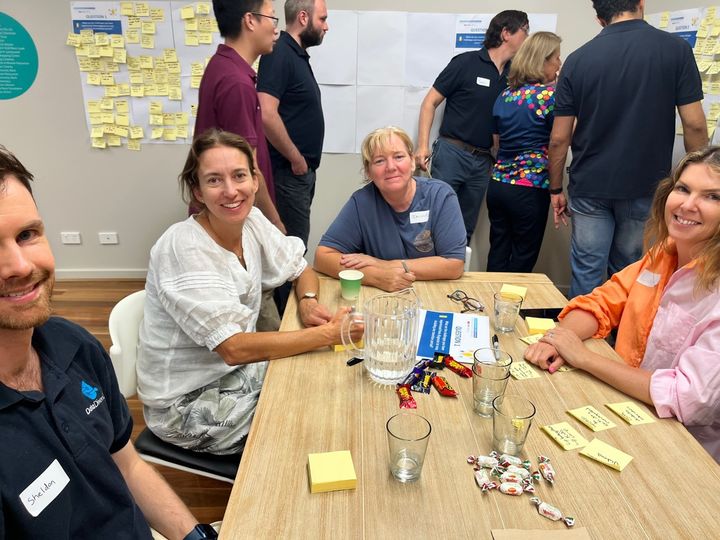
The innovative new data platform that will provide patients and families, clinicians and researchers with unparalleled access to diabetes-related information and resources is on its way. As the DiabHQ project enters its second year, we reflect on the progress to date and what lies ahead.
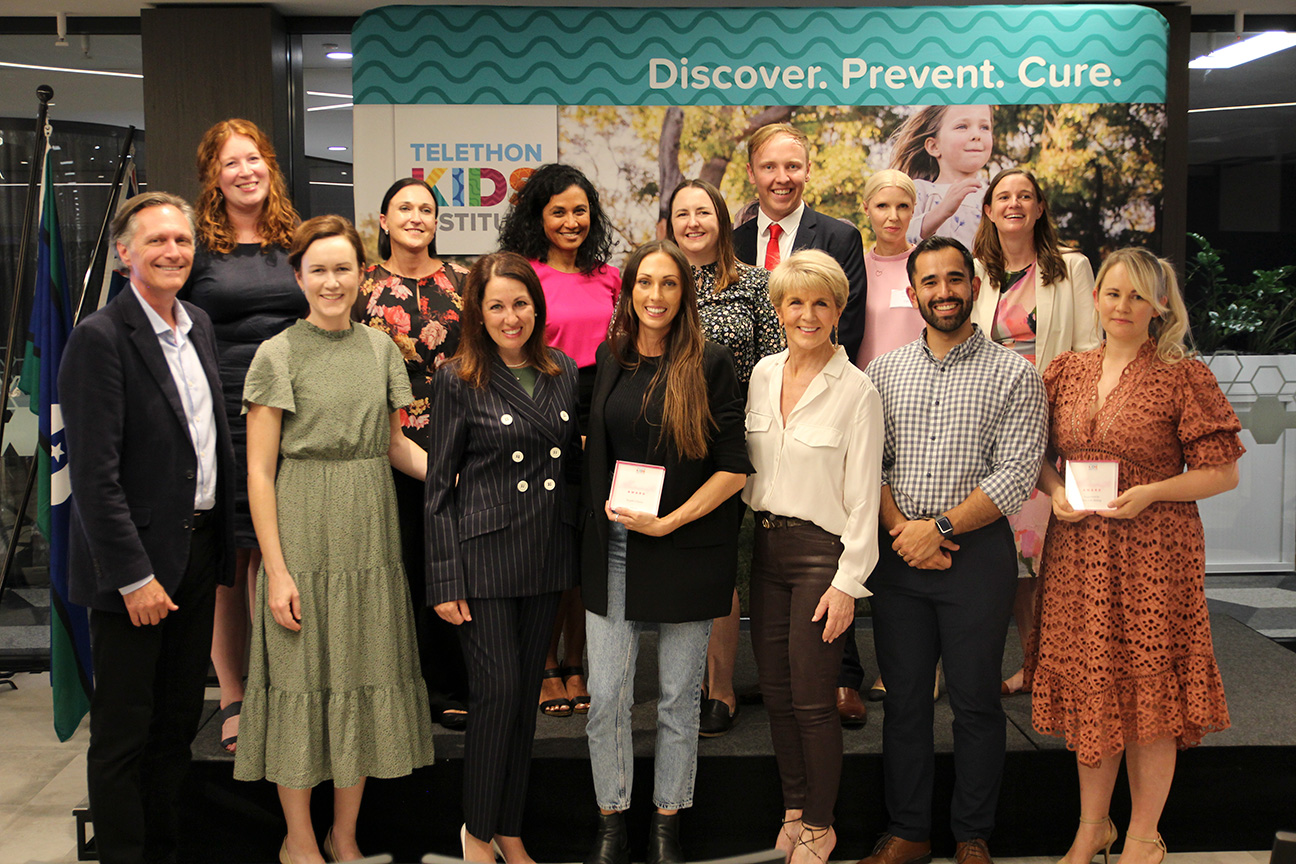
Ten researchers from different areas took to the stage with a carefully crafted presentation and three-minute pitch, in efforts to spark the interest of 80 guests
In 2024, the government of Western Australia introduced 'nirsevimab', a monoclonal antibody offering protection from respiratory syncytial virus (RSV), for eligible infants. This study explores why parents of infants who were eligible to receive nirsevimab opted to decline or delay the immunisation.
There are lots of ways of getting involved in the research at the Wesfarmers Centre.