
Search
The Australian Spasticity Assessment Scale complies with the definition of spasticity and is clinically feasible in paediatric settings
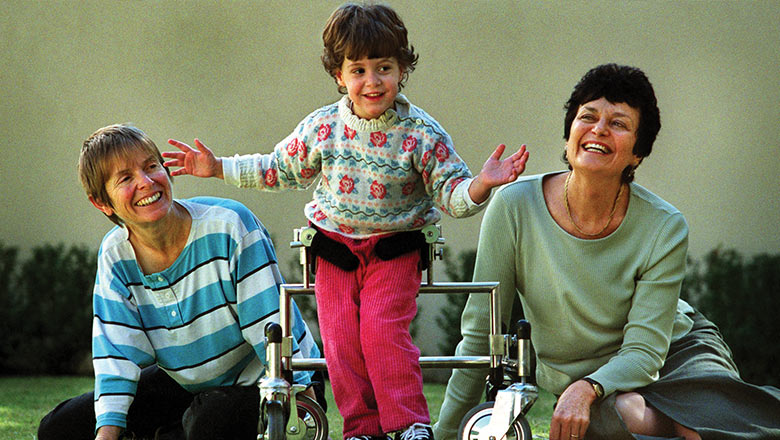
Cerebral palsy is not only the result of birth trauma and the lack of oxygen supply during delivery.
Early detection of cerebral palsy (CP) risk is possible from 12 weeks corrected gestational age (CGA) using standardised assessments; however, up to half of children at risk are not referred early, missing out on early intervention. We investigated the barriers and facilitators to accessing early intervention from the perspective of parents of children who did not receive services by 6 months CGA.
General movements (GMs) are part of the spontaneous movement repertoire and are present from early fetal life onwards up to age five months. GMs are connected to infants' neurological development and can be qualitatively assessed via the General Movement Assessment. In particular, between the age of three to five months, typically developing infants produce fidgety movements and their absence provides strong evidence for the presence of cerebral palsy.
Much information exists about functions of the human placenta and about potential mechanisms by which the placenta may influence human health or disease...
Aim: To: (1) develop a core outcome set (COS) to assess chronic pain interference and impact on emotional functioning for children and young people with cerebral palsy (CP) with varying communication, cognitive, and functional abilities; (2) categorize the assessment tools according to reporting method or observer-reported outcome measures; and (3) categorize the content of tools in the COS according to the International Classification of Functioning, Disability and Health (ICF).
For children with cerebral palsy (CP), who are marginally ambulant, gross motor capacity peaks between 6 and 7 years of age with a subsequent clinical decline, impacting their ability to engage in physical activity. Active Strides-CP is a novel package of physiotherapy targeting body functions, activity and participation outcomes for children with bilateral CP. This study will compare Active Strides-CP to usual care in a multisite randomised waitlist-controlled trial.
The EQ-5D-5L is a generic health utility instrument for measuring health-related quality of life (HRQoL), with self-report and proxy report versions for children (EQ-5D-Y-5L). Children with intellectual disability (ID) are a heterogeneous population whose impairments and comorbidities place them at risk of poor HRQoL. This study aimed to describe the content validity and suitability for children with ID of a proxy report version of the EQ-5D-Y-5L as seen by their caregivers.
Chronic pain assessment tools exist for children, but may not be valid, reliable, and feasible for populations with functional, cognitive or communication limitations, for example, cerebral palsy (CP). This study aimed to (i) identify chronic pain assessment tools used with children and young people and rate their measurement properties; (ii) develop a CP specific feasibility rating tool to assess the feasibility of tools in CP; and (iii) categorise tools according to reporting method.
Fidgety movements occur in infants between the age of 9 to 20 weeks post-term, and their absence are a strong indicator that an infant has cerebral palsy. Prechtl's General Movement Assessment method evaluates whether an infant has fidgety movements, but requires a trained expert to conduct it. Timely evaluation facilitates early interventions, and thus computer-based methods have been developed to aid domain experts.