
Search
Showing results for "early life"
The Australian National Healthy Skin Guideline summarises evidence-based treatment of impetigo, scabies and fungal infections in high burden settings
These data provide the first evidence for a broad autism phenotype expressed in a physical characteristic
While autism spectrum disorder (ASD) and specific language impairment (SLI) have traditionally been conceptualized as distinct disorders, recent findings...
The aim of the task force was to provide technical recommendations regarding oscillometry measurement
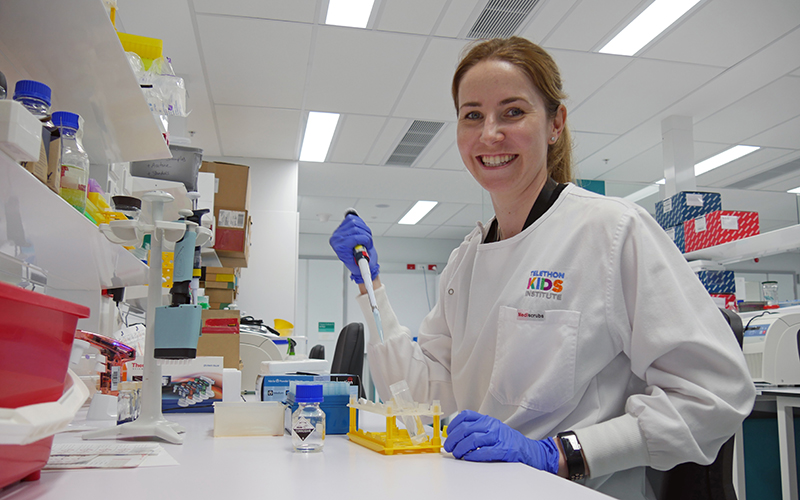
The Kids Research Institute Australia researchers will seek to better understand the relationship between antibodies and inflammation in people with multiple sclerosis (MS), thanks to a generous grant from MS Research Australia.
The Kids Research Institute Australia have shown that genetic variations that influence BMI and diabetes are similar to those in non-Aboriginal populations.
The internet is emerging as a valuable tool for scientists to gather data for critical research into rare diseases.
Providing remote communities with access to chlorinated swimming pools has been considered as a possible strategy for reducing ear and skin infection rates...
Acute lower respiratory infections (ALRI) are a major cause of hospitalisation in young children
Cancer researchers at The Kids for Child Health Research have developed a new test that can rapidly detect the loss of genes in cancer cells.