
Search
Findings from longitudinal research, globally, repeatedly emphasise the importance of a taking an early life course approach to mental health promotion; one that invests in the formative years of development, from early childhood to young adulthood, just prior to the transition to parenthood for most. While population monitoring systems have been developed for this period, they are typically designed for use within discrete stages.
The mental health and wellbeing of young people has important consequences for students and society. Schools are a logical environment for management and early intervention of wellbeing, mental health and engagement with school. Interventions aimed at improving mental health and wellbeing in education systems requires knowledge of how wellbeing is clustered at a school level. Cluster-randomised trials, and regression analyses of such data also require knowledge of clustering.
Mental ill-health, substance use and their co-occurrence among sexuality diverse young people during earlier adolescence is relatively understudied. The preventive utility of positive school climate for sexuality diverse adolescents' mental health is also unclear, as well as the role of teachers in conferring this benefit.
Youth sports programs provide an opportunity to embed mental health and wellbeing programs to reach young people with mental health support. The aims of this study were to (a) examine mental health outcomes from a youth sports program including a mental health program (Life-Fit-Learning) in adolescent boys and girls, and (b) among the larger cohort of adolescent boys, to examine whether partial or full completion of Life-Fit-Learning yielded different outcomes for boys within healthy and high-risk ranges for anxiety, depression and behavioral concerns.
To describe the implementation and outcomes of a combined individual placement and support (IPS) and vocational peer work program for young people with mental ill-health.
Parental support is strongly correlated with protective factors for trans youth yet most experience parental rejection or ambivalence regarding their gender. Many parents report a desire to support their child but indicate lack of understanding and support as key barriers. We aimed to develop a nuanced understanding of the challenges and facilitators experienced by Australian parents in developing understanding, support and acceptance of their child’s gender and their needs to do so.
Parental support is strongly correlated with protective factors for trans youth, however, most experience unsupportive parental attitudes. We aimed to better understand how youth perceive parental reactions to their gender identity disclosure and what they consider to be barriers to, and facilitators of, support.
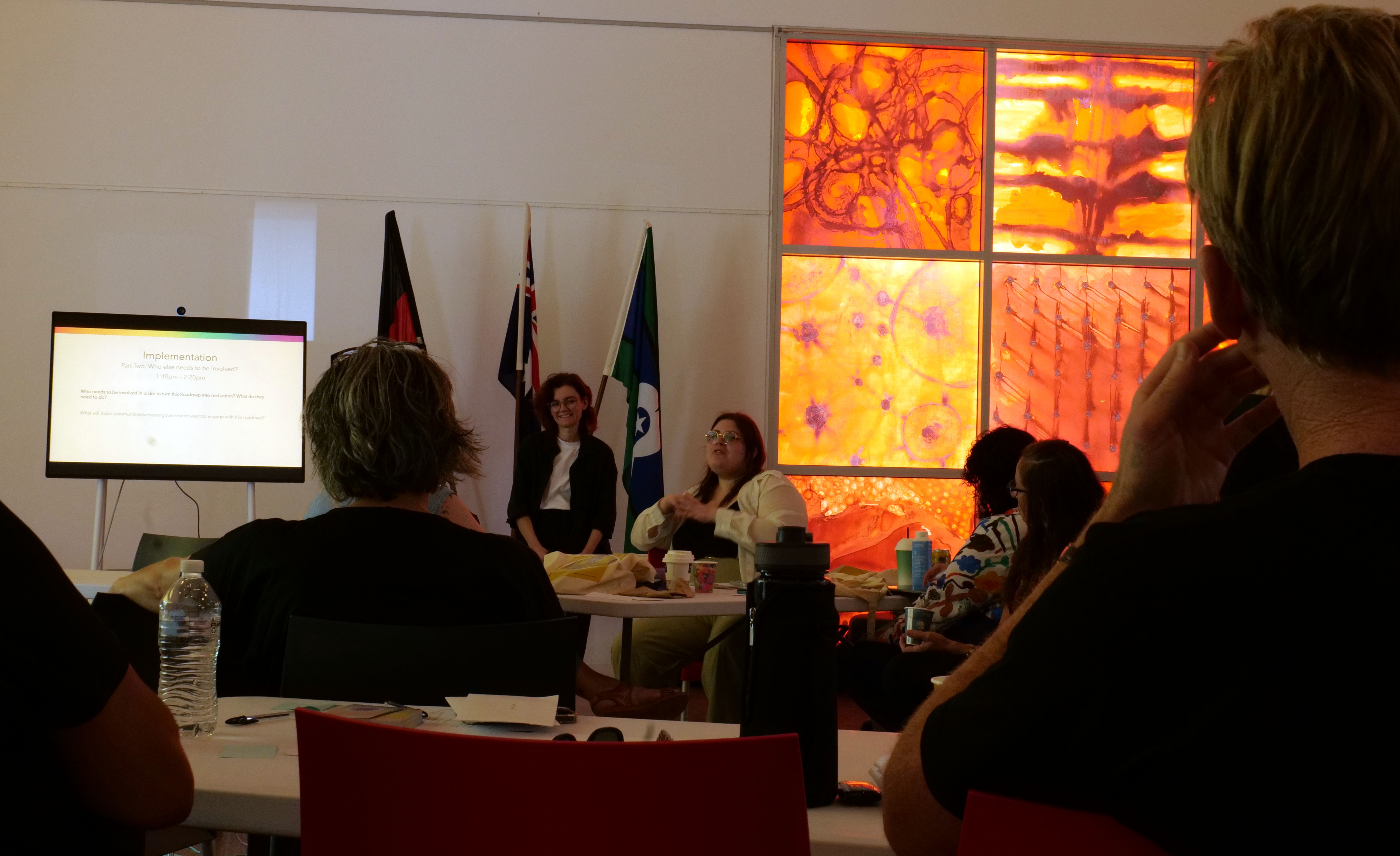
Walkern Katatdjin researcher and lead author Mx Shakara Liddelow-Hunt leads a conversation with the community on the key actions to include in the Roadmap.
Individuals experiencing homelessness are among the most vulnerable population for mental and physical health disparities. Despite navigating numerous stressors on a day-to-day basis, they are vastly underrepresented within coping research. Using a person-centered approach, this study addresses ways in which technology is leveraged to manage ongoing stressors associated with the experience of homelessness.
Parental support is strongly associated with protective factors across a range of child health outcomes for trans young people. Commonly, parents report barriers to supporting their child such as lack of understanding and difficulty in accessing information and support regarding gender diversity.