
Search

Five researchers from The Kids Research Institute Australia have been awarded three-year fellowships with the aim of keeping more WA-based PhD graduates involved in child health research.
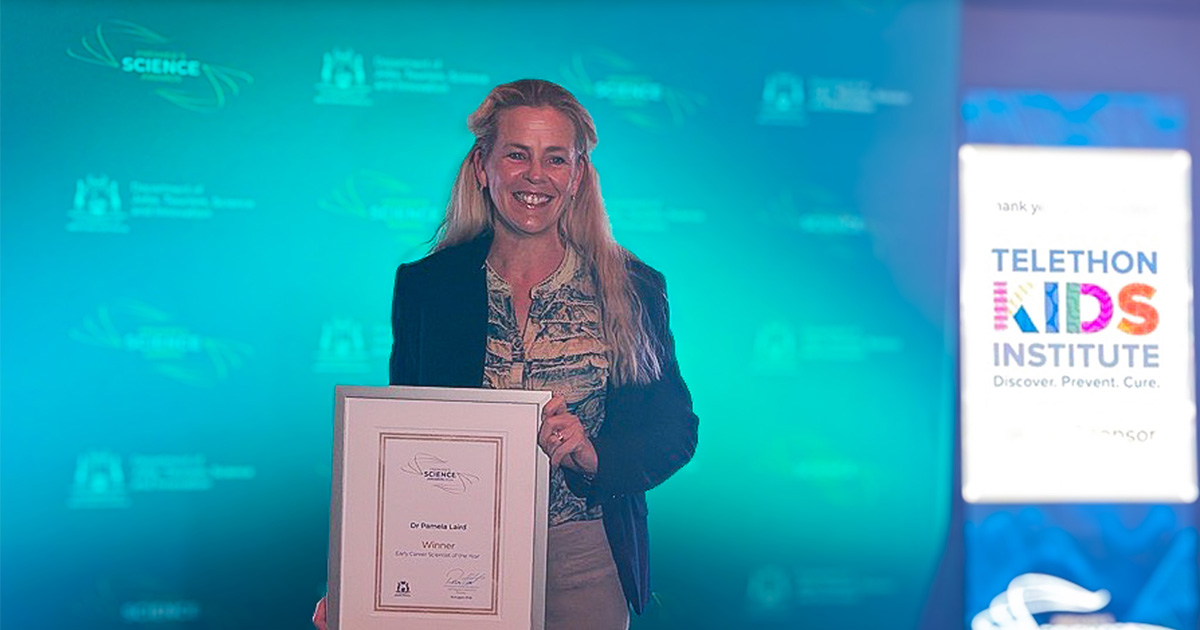
Congratulations to respiratory health researcher and clinician Dr Pam Laird, who was last night named joint winner of Early Career Scientist of the Year at the 2024 Premier’s Science Awards.

Eight The Kids Research Institute Australia-led projects will benefit from the latest round of WA Child Research Fund (WACRF) grants, announced this week by Medical Research Minister Stephen Dawson.
Asthma remission has emerged as a potential therapeutic goal. However, definitions of remission have primarily focused on adult populations, with limited consensus on how remission should be defined in children.
Pulmonary exacerbations pose a significant clinical burden on people with cystic fibrosis (pwCF). Whether management of exacerbations should change in the context of modulator therapy is unclear. We describe the characteristics, treatment and lung function outcomes of pulmonary exacerbations requiring intravenous antibiotic therapy (PERITs) in a contemporary Australian cohort of pwCF, in an era of rapidly broadening access to modulator therapy.
Limited evidence suggests that airway epithelial structure and function is disrupted in very preterm infants; however, the epithelial morphology and physiology has not been well characterised following discharge from neonatal intensive care. This study aimed to characterise the nasal airway epithelium from 1-year-old survivors of very preterm birth.
Antisense oligonucleotides are an emerging therapeutic option to treat diseases with known genetic origin. In the age of personalised medicines, antisense oligonucleotides can sometimes be designed to target and bypass or overcome a patient's genetic mutation, in particular those lesions that compromise normal pre-mRNA processing. Antisense oligonucleotides can alter gene expression through a variety of mechanisms as determined by the chemistry and antisense oligomer design.
Respiratory tract infections (RTIs) drive lung function decline in children with cystic fibrosis (CF). While the respiratory microbiota is clearly associated with RTI pathogenesis in infants without CF, data on infants with CF is scarce. We compared nasal microbiota development between infants with CF and controls and assessed associations between early-life nasal microbiota, RTIs, and antibiotic treatment in infants with CF.
Consumption of nitrate in drinking water has previously been associated with a range of adverse health effects, including methemoglobinemia and potentially cancer. In animal models, it has been shown to impact respiratory structure and function, however, there is a paucity of data of the effects of in utero exposure on the respiratory health of offspring.
Many survivors of preterm birth (<37 weeks gestation) have lifelong respiratory deficits, the drivers of which remain unknown. Influencers of pathophysiological outcomes are often detectable at the gene level and pinpointing these differences can help guide targeted research and interventions. This study provides the first transcriptomic analysis of primary nasal airway epithelial cells in survivors of preterm birth at approximately 1 year of age.