
Search
Showing results for "early life"

Developmental Origins of Health and Disease

Research Officer

Amanda is a Certified Child Life Specialist and has a Bachelor of Science in Psychology and Master of Arts in Education with an emphasis on Child Life in Hospitals and Early Childhood Education.
The dramatic rise in early childhood allergic diseases indicates the specific vulnerability of the immune system to early life environmental changes.
Epigenetics links perinatal influences with later obesity. We identifed differentially methylated CpG (dmCpG) loci measured at 17 years associated with concurrent adiposity measures and examined whether these were associated with hsCRP, adipokines, and early life environmental factors. Genome-wide DNA methylation from 1192 Raine Study participants at 17 years, identified 29 dmCpGs associated with body mass index, 10 with waist circumference and 9 with subcutaneous fat thickness.

Associate Professor, Honorary Research Fellow
This study used population-based record linkage to examine the association between early life risk factors and academic achievement.
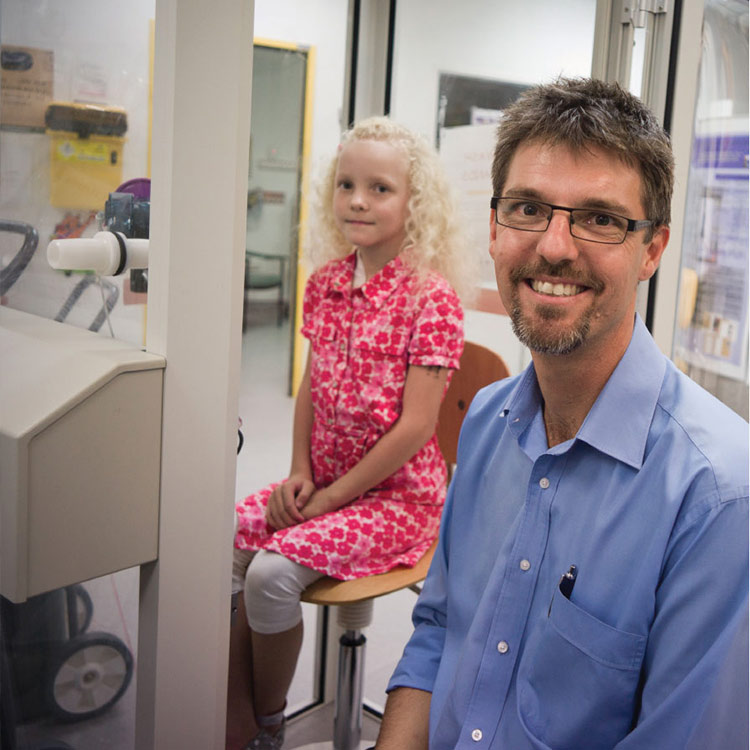
Life expectancy was in the 20s for children born with cystic fibrosis 30 years ago, today it is in the 30s. Professor Graham Hall is leading this research.
Long-standing health inequalities in Australian society that were exposed by the severe acute respiratory syndrome coronavirus 2 (SARS-CoV-2) pandemic were described as "fault lines" in a recent call to action by a consortium of philanthropic organizations. With asthma a major contributor to childhood disease burden, studies of its spatial epidemiology can provide valuable insights into the emergence of health inequalities early in life.
From the results of well-performed population health studies, we now have excellent data demonstrating that deficits in adult lung function may be present early in life, possibly as a result of developmental disorders, incurring a lifelong risk of obstructive airway diseases such as asthma and chronic obstructive pulmonary disease.