
Search
Showing results for "early life"

A picture of early childhood services in Tasmania from birth to age five
Early life feeding practices have an influence on motor development outcomes into late childhood and adolescence independent of sociodemographic factors
This study used population-based record linkage to examine the association between early life risk factors and academic achievement.
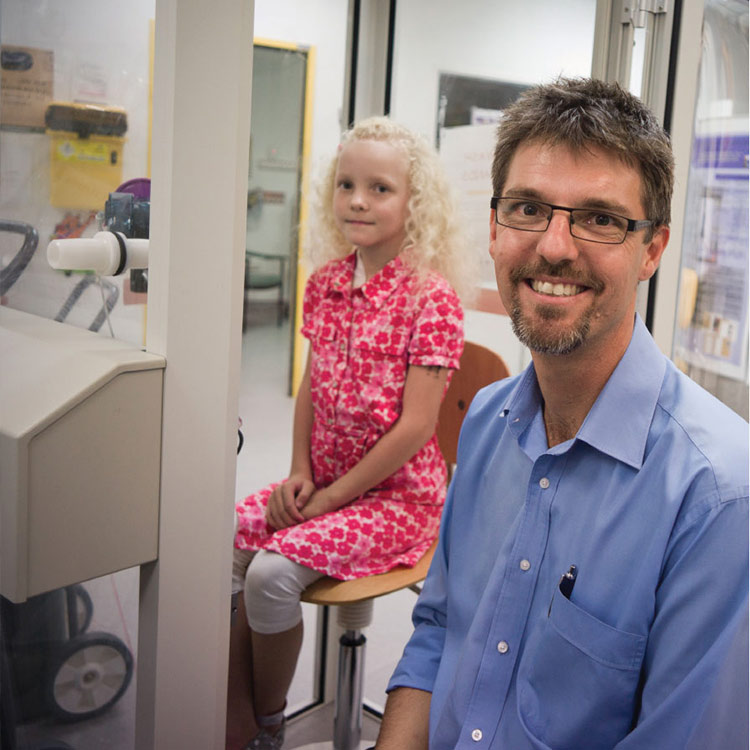
Life expectancy was in the 20s for children born with cystic fibrosis 30 years ago, today it is in the 30s. Professor Graham Hall is leading this research.
Studies addressing the ontogeny of the innate immune system in early life have reported mainly on Toll-like receptor (TLR) responses in infants living in...
There is a growing need for early biomarkers that may predict the development of atopic dermatitis (AD). As alterations in skin barrier may be a primary event in disease pathogenesis, epithelial cell (EC) cytokines expression patterns may be a potential biomarker in early life to target allergy preventive strategies towards "at-risk" infants. The aim of this longitudinal investigation was to examine from birth over the course of infancy levels of the EC cytokines: thymic stromal lymphopoietin (TSLP), interleukin (IL)-33, IL-25, and IL-17 in infants at high-risk of AD due to maternal atopy.

Senior Research Fellow
Onco-fetal reprogramming of the tumor ecosystem induces fetal developmental signatures in the tumor microenvironment, leading to immunosuppressive features. Here, we employed single-cell RNA sequencing, spatial transcriptomics and bulk RNA sequencing to delineate specific cell subsets involved in hepatocellular carcinoma relapse and response to immunotherapy.
Both fetal and tumor tissue microenvironments display immunosuppressive features characterized by the presence of specific immunomodulatory stromal and immune cell populations. Recently, we discovered shared microenvironments between hepatocellular carcinoma and fetal tissues and described this phenomenon as an oncofetal ecosystem.

Honorary Research Associate