
Search
Showing results for "early life"
Wellbeing and mental health are fundamental rights of children and adolescents essential for sustainable development. Understanding the epidemiology of child and adolescent wellbeing is essential to informing population health approaches to improving wellbeing and preventing mental illness.

This article explores how to support a child's physical and mental health during critical developmental periods, known as the first 1,000 days of life.
How Australia can invest in children and return more presents the opportunity for wise investments in evidence-based early intervention to radically change outcomes for Australian children and young people.
Human perinatal life is characterized by a period of extraordinary change during which newborns encounter abundant environmental stimuli and exposure to potential pathogens. To meet such challenges, the neonatal immune system is equipped with unique functional characteristics that adapt to changing conditions as development progresses across the early years of life, but the molecular characteristics of such adaptations remain poorly understood.
This study identified that expsoure to folate has effects on the regulation of DNA methylation during fetal development.

Head, Nutrition in Early Life
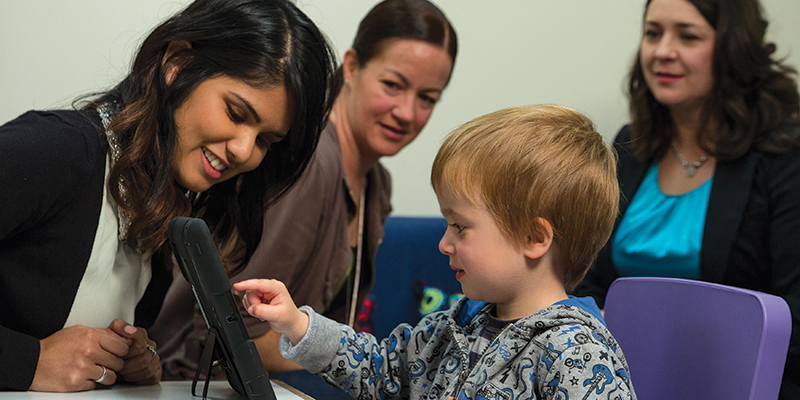
An attention-training game developed by researchers at The Kids Research Institute Australia is helping to improve social skill development in school-aged kids with autism.
The gut microbiota is influenced by environmental factors such as food. Maternal diet during pregnancy modifies the gut microbiota composition and function, leading to the production of specific compounds that are transferred to the fetus and enhance the ontogeny and maturation of the immune system. Prebiotics are fermented by gut bacteria, leading to the release of short-chain fatty acids that can specifically interact with the immune system, inducing a switch toward tolerogenic populations and therefore conferring health benefits.
Respiratory syncytial virus (RSV) causes annual epidemics of infections affecting the whole population. In vitro, it has been shown to infect and persist in human dendritic cells (DCs) for prolonged periods. Initially persistence is associated with low levels of replication before the virus becomes dormant. Reactivation of viral replication can be triggered many months later.
Children and adolescents with Intellectual Disability experience a worse Quality-of-Life (QoL) relative to typically developing peers. Thus, QoL evaluation is important for identifying support needs and improving rehabilitation effectiveness. Nevertheless, currently in Italy there are not tools with this scope. This study aims to translate and cross-culturally adapt the Quality-of-Life Inventory-Disability into Italian.