
Search
Transcriptomic technologies have revolutionized the study of gene expression and RNA biology. Different RNA sequencing methods enable the analyses of diverse species of transcripts, including their abundance, processing, stability, and other specific features. Mitochondrial transcriptomics has benefited from these technologies that have revealed the surprising complexity of its RNAs. Here we describe a method based upon cyclization of mitochondrial RNAs and next generation sequencing to analyze the steady-state levels and sizes of mitochondrial RNAs, their degradation products, as well as their processing intermediates by capturing both 5' and 3' ends of transcripts.
Vulvodynia and pudendal neuralgia comprise significant contributors to vulvar-related pain and its impact on daily life. A retrospective clinical audit was conducted at the Women's Health & Research Institute of Australia, Sydney, to determine the pattern of use and the efficacy of the application of topical amitriptyline 0.5% plus oestriol 0.03% in organogel (AOO), to the vulvar vestibule in reducing the impact of pain on daily life.

Being a parent in the 21st Century can present some challenges, so it is important to use all the tools.
Behavioural support for young people with Prader-Willi syndrome (PWS) is necessary in home and school environments. The Trauma Informed Practice (TIP) framework has been used to support young people with complex behavioural needs in school settings. To identify parent and professional perspectives on behavioural challenges experienced by young people with PWS and strategies for supports, to inform understanding of how they are aligned with the TIP framework.
There is a growing need for early biomarkers that may predict the development of atopic dermatitis (AD). As alterations in skin barrier may be a primary event in disease pathogenesis, epithelial cell (EC) cytokines expression patterns may be a potential biomarker in early life to target allergy preventive strategies towards "at-risk" infants. The aim of this longitudinal investigation was to examine from birth over the course of infancy levels of the EC cytokines: thymic stromal lymphopoietin (TSLP), interleukin (IL)-33, IL-25, and IL-17 in infants at high-risk of AD due to maternal atopy.
Parainfluenza viruses are significant contributors to childhood respiratory illness worldwide, although detailed epidemiological studies are lacking. Few recent Australian studies have investigated serotype-specific PIV epidemiology, and there is a paucity of southern hemisphere PIV reports. We report age-stratified PIV hospitalisation rates and a mathematical model of PIV seasonality and dynamics in Western Australia (WA).
Neutrophil elastase is a significant risk factor for structural lung disease in cystic fibrosis, and Pseudomonas aeruginosa airway infection is linked with neutrophilic inflammation and substantial respiratory morbidity. We aimed to evaluate how neutrophil elastase (NE) activity changes after P. aeruginosa eradication and influences early disease outcomes. We assessed participants in the AREST CF cohort between 2000 and 2018 who had P. aeruginosa cultured from their routine annual bronchoalveolar lavage (BAL) fluid and who underwent eradication treatment and a post eradication BAL. Factors associated with persistent P. aeruginosa infection, persistent neutrophilic inflammation following eradication and worse structural lung disease one year post-eradication were evaluated.
Medulloblastoma (MB) consists of four core molecular subgroups with distinct clinical features and prognoses. Treatment consists of surgery, followed by radiotherapy and cytotoxic chemotherapy. Despite this intensive approach, outcome remains dismal for patients with certain subtypes of MB, namely, MYC-amplified Group 3 and TP53-mutated SHH. Using high-throughput assays, six human MB cell lines were screened against a library of 3208 unique compounds. We identified 45 effective compounds from the screen and found that cell cycle checkpoint kinase (CHK1/2) inhibition synergistically enhanced the cytotoxic activity of clinically used chemotherapeutics cyclophosphamide, cisplatin, and gemcitabine.
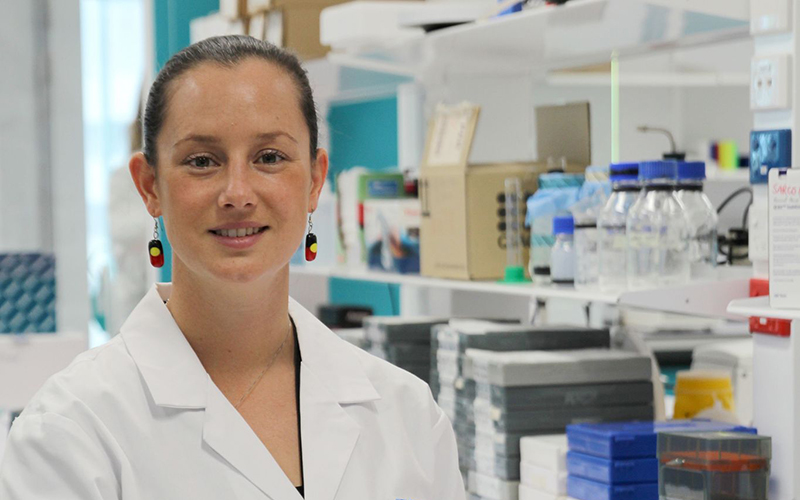
The Kids Research Institute Australia brain cancer researcher, Dr Jessica Buck will today join the ranks of a select group of brilliant female scientists.
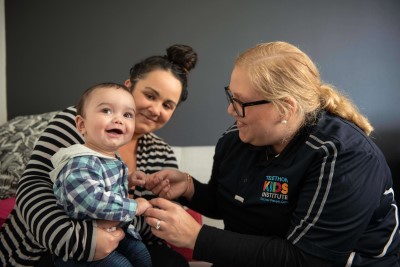
The Kids Research Institute Australia researchers have found close to 40 per cent of Aboriginal babies begin to develop middle ear infections between two and four months of age in a first of its kind study in metropolitan Perth.