Search
Research
Modes of transmission and attack rates of group A Streptococcal infection: a protocol for a systematic review and meta-analysisSummarising the current knowledge of Strep A transmission to humans will address gaps in the evidence and inform prevention and control strategies. The objective of this study is to evaluate the modes of transmission and attack rates of group A streptococcal infection in human populations.
Research
Understanding valvular heart disease in the dental settingLimited evidence is available regarding dentists' knowledge and interpretation of infective endocarditis (IE) prophylaxis guidelines. The aim of this study was to determine understanding and management of rheumatic and non-rheumatic valvular heart disease (VHD) in the dental setting in Western Australia (WA).
Research
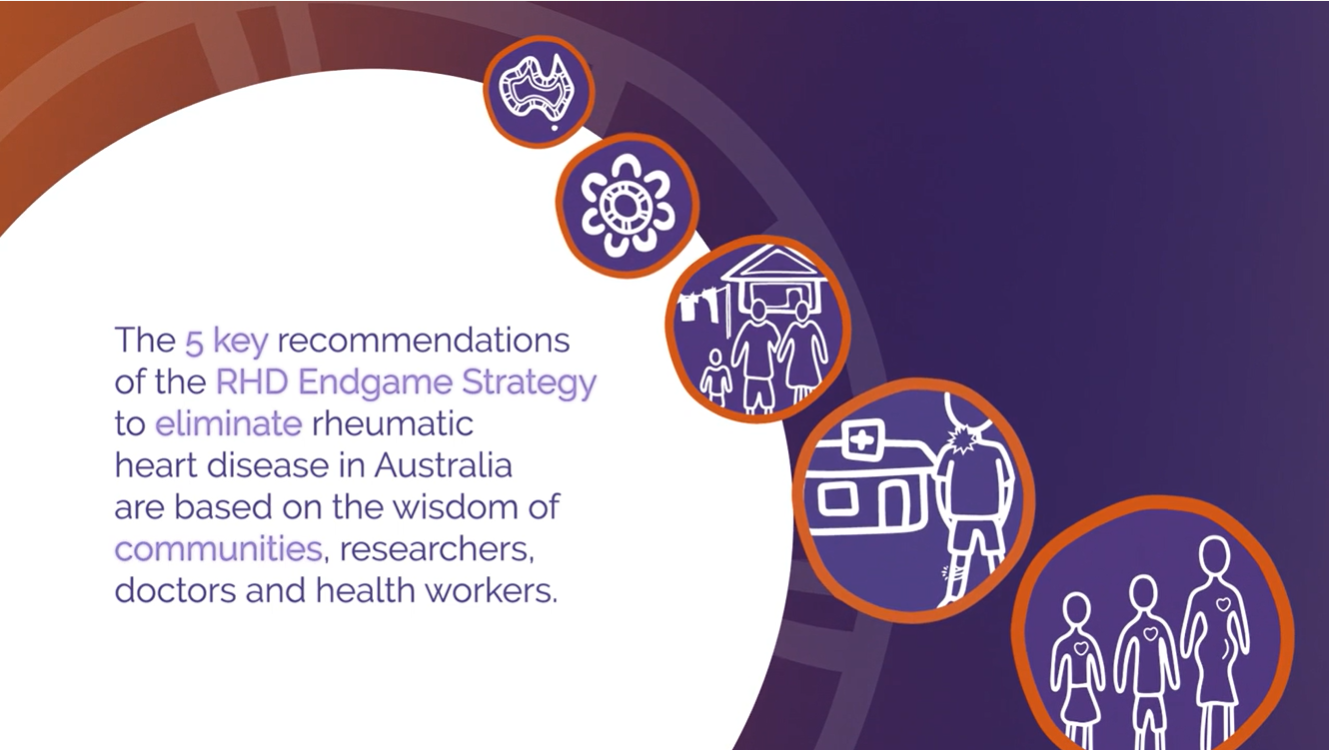
Ending rheumatic heart disease in Australia: the evidence for a new approachThe RHD Endgame Strategy: the blueprint to eliminate rheumatic heart disease in Australia by 2031 (the Endgame Strategy) is the blueprint to eliminate rheumatic heart disease (RHD) in Australia by 2031. Aboriginal and Torres Strait Islander people live with one of the highest per capita burdens of RHD in the world.
Research
Subcutaneous infusion of high-dose benzathine penicillin G is safe, tolerable, and suitable for less-frequent dosing for rheumatic heart disease secondary prophylaxis: a phase 1 open-label population pharmacokinetic studySince 1955, the recommended strategy for rheumatic heart disease secondary prophylaxis has been benzathine penicillin G injections administered intramuscularly every 4 weeks. Due to dosing frequency, pain, and programmatic challenges, adherence is suboptimal. It has previously been demonstrated that BPG delivered subcutaneously at a standard dose is safe and tolerable and has favorable pharmacokinetics, setting the scene for improved regimens with less frequent administration.
Research
Otitis media at 6-monthly assessments of Australian First Nations children between ages 12–36 months: Findings from two randomised controlled trials of combined pneumococcal conjugate vaccinesIn remote communities of northern Australia, First Nations children with hearing loss are disproportionately at risk of poor school readiness and performance compared to their peers with no hearing loss. The aim of this trial is to prevent early childhood persisting otitis media (OM), associated hearing loss and developmental delay.
Research
Research opportunities for the primordial prevention of rheumatic fever and rheumatic heart disease - streptococcal vaccine development: a national heart, lung and blood institute workshop reportStreptococcus pyogenes, also known as group A streptococcus (StrepA), is a bacterium that causes a range of human diseases, including pharyngitis, impetigo, invasive infections, and post-infection immune sequelae such as rheumatic fever and rheumatic heart disease. StrepA infections cause some of the highest burden of disease and death in mostly young populations in low-resource settings. Despite decades of effort, there is still no licensed StrepA vaccine, which if developed, could be a cost-effective way to reduce the incidence of disease.
Research
Outcomes of rheumatic fever in Uganda: a prospective cohort studyRheumatic heart disease is the largest contributor to cardiac-related mortality in children worldwide. Outcomes in endemic settings after its antecedent illness, acute rheumatic fever, are not well understood. We aimed to describe 3-5 year mortality, acute rheumatic fever recurrence, changes in carditis, and correlates of mortality after acute rheumatic fever.
Research
A pilot study to develop assessment tools for Group A Streptococcus surveillance studiesGroup A Streptococcus (GAS) causes pharyngitis (sore throat) and impetigo (skin sores) GAS pharyngitis triggers rheumatic fever (RF) with epidemiological evidence supporting that GAS impetigo may also trigger RF in Australian Aboriginal children. Understanding the concurrent burden of these superficial GAS infections is critical to RF prevention. This pilot study aimed to trial tools for concurrent surveillance of sore throats and skins sore for contemporary studies of RF pathogenesis including development of a sore throat checklist for Aboriginal families and pharynx photography.
Research
Burden of disease and barriers to comprehensive care for rheumatic heart disease in South Africa: an updated systematic review protocolRheumatic heart disease (RHD) is responsible for a significant burden of cardiovascular morbidity and mortality, and remains the most common cause of acquired heart disease among children and young adults in low-income and middle-income countries. Additionally, the global COVID-19 pandemic has forced the emergency restructuring of many health systems, which has had a broad impact on health in general, including cardiovascular disease.
Research
Standardization of Epidemiological Surveillance of Acute Poststreptococcal GlomerulonephritisAcute poststreptococcal glomerulonephritis (APSGN) is an immune complex-induced glomerulonephritis that develops as a sequela of streptococcal infections. This article provides guidelines for the surveillance of APSGN due to group A Streptococcus (Strep A). The primary objectives of APSGN surveillance are to monitor trends in age- and sex-specific incidence, describe the demographic and clinical characteristics of patients with APSGN, document accompanying risk factors, then monitor trends in frequency of complications, illness duration, hospitalization rates, and mortality.