Skip to content
The Kids Research Institute Australia logo
Donate

Search

Child Health Analytics

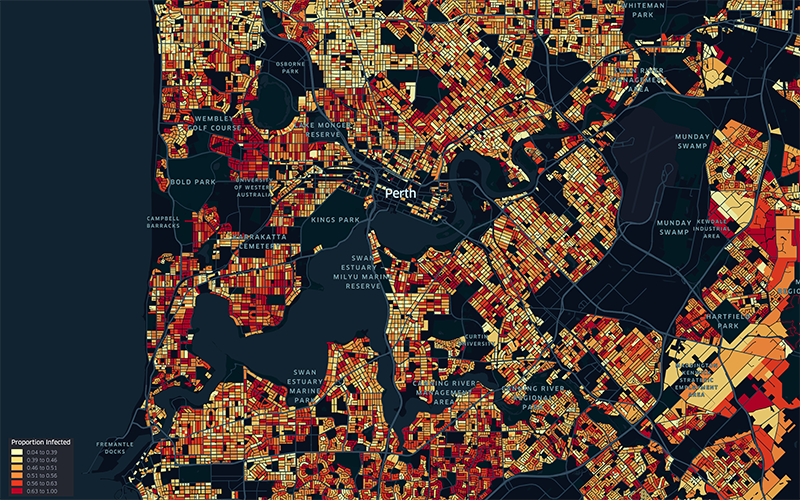
Our Child Health Analytics Team uses cutting-edge technologies to better understand how and why the health and wellbeing of children varies from place to place. We develop innovative geospatial methods that can harness large, complex datasets to pinpoint hotspots of elevated risk, evaluate change through time, and explore underlying drivers.
Research

Twenty years of integrated disease surveillance and response in Sub-Saharan Africa: challenges and opportunities for effective management of infectious disease epidemics

This systematic review aimed to analyse the performance of the Integrated Disease Surveillance and Response strategy in Sub-Saharan Africa and how its implementation has embraced advancement in information technology, big data analytics techniques and wealth of data sources.

Research

Achieving universal electrification of rural healthcare facilities in sub-Saharan Africa with decentralized renewable energy technologies

A potential response to the COVID-19 pandemic in sub-Saharan Africa (SSA) with long-term benefits is to provide electricity for medical equipment in rural health centers and communities. This study identifies a large gap in the electrification of healthcare facilities in SSA, and it shows that decentralized photovoltaic systems can offer a clean, reliable, quick, and cost-effective solution.

Research

A simulation study of disaggregation regression for spatial disease mapping

Disaggregation regression has become an important tool in spatial disease mapping for making fine-scale predictions of disease risk from aggregated response data.

Research

WALLABY Pilot Survey: The Diversity of Ram Pressure Stripping of the Galactic HI Gas in the Hydra Cluster

This study uses H i image data from the Widefield ASKAP L-band Legacy All-sky Blind surveY (WALLABY) pilot survey with the Australian Square Kilometre Array Pathfinder (ASKAP) telescope, covering the Hydra cluster out to 2.5r 200. We present the projected phase-space distribution of H i-detected galaxies in Hydra, and identify that nearly two-thirds of the galaxies within 1.25r200 may be in the early stages of ram pressure stripping.

Research

The prevalence of tuberculosis, malaria and soil-transmitted helminth infection in minority indigenous people of Southeast Asia and the Western Pacific: protocol for a systematic review and meta-analysis

Infectious diseases such as tuberculosis (TB), malaria and soil-transmitted helminthiasis continue to impose a significant global health burden and socio-economic impact. Globally, minority indigenous people are disproportionately affected by poverty and are shown to experience a disparate burden of disease and poorer health outcomes than the comparative majority population.

Research

Mapping malaria by sharing spatial information between incidence and prevalence data sets

As malaria incidence decreases and more countries move towards elimination, maps of malaria risk in low-prevalence areas are increasingly needed. For low-burden areas, disaggregation regression models have been developed to estimate risk at high spatial resolution from routine surveillance reports aggregated by administrative unit polygons.

Research

Maps and metrics of insecticide-treated net access, use, and nets-per-capita in Africa from 2000-2020

Insecticide-treated nets (ITNs) are one of the most widespread and impactful malaria interventions in Africa, yet a spatially-resolved time series of ITN coverage has never been published. Using data from multiple sources, we generate high-resolution maps of ITN access, use, and nets-per-capita annually from 2000 to 2020 across the 40 highest-burden African countries.

Research

Global economic costs due to vivax malaria and the potential impact of its radical cure: A modelling study

An estimated 14 million cases of Plasmodium vivax malaria were reported from Asia, Central and South America, and the Horn of Africa. The clinical burden of vivax malaria is largely driven by its ability to form dormant liver stages (hypnozoites) that can reactivate to cause recurrent episodes of malaria. Elimination of both the blood and liver stages of the parasites ("radical cure") is required to achieve a sustained clinical response and prevent ongoing transmission of the parasite.

Research

Semi-field evaluation of the exposure-free mosquito electrocuting trap and BG-Sentinel trap as an alternative to the human landing catch for measuring the efficacy of transfluthrin emanators against Aedes aegypti

The human landing catch (HLC) measures human exposure to mosquito bites and evaluates the efficacy of vector control tools. However, it may expose volunteers to potentially infected mosquitoes. The mosquito electrocuting trap (MET) and BG-Sentinel traps (BGS) represent alternative, exposure-free methods for sampling host-seeking mosquitoes. This study investigates whether these methods can be effectively used as alternatives to HLC for measuring the efficacy of transfluthrin emanator against Aedes aegypti.