
Search
Nick Gottardo MBChB FRACP PhD Head of Paediatric and Adolescent Oncology and Haematology, Perth Children’s Hospital; Co-head, Brain Tumour Research
Childhood cancer survivors (CCS) are at risk of long-term skeletal muscle deficits following intensive therapies during critical periods of growth. This review aimed to synthesize approaches for assessing muscle quantity, quality, and function in CCS and to quantify deficits relative to healthy peers.
Leading international and national experts will gather at The Kids Research Institute Australia on Friday for a D-Light Research Symposium.
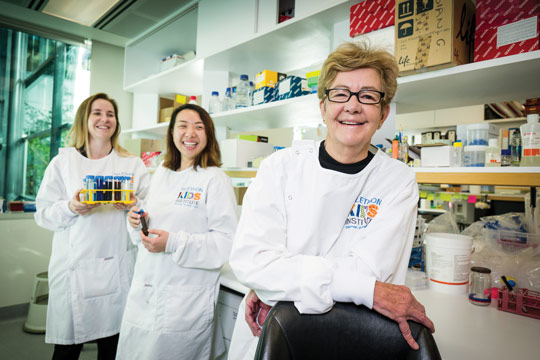
Researchers at The Kids Research Institute Australia are continuing to hone in on the effects of ultraviolet radiation and vitamin D on the immune system.
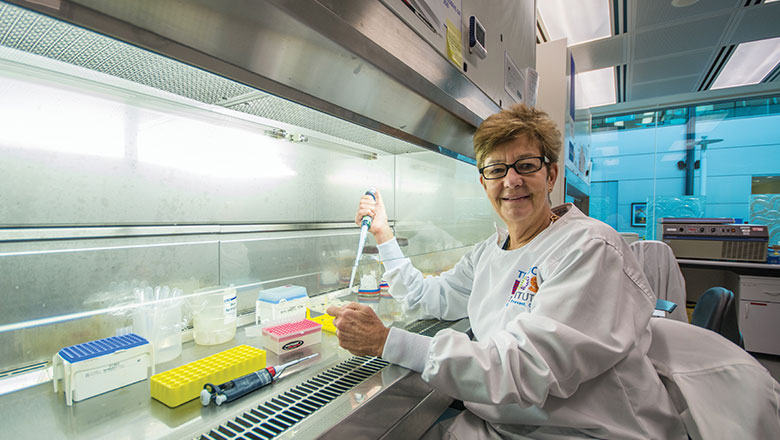
The D-Light program, set up in 2014, aims to shed light on the amount of sun exposure that will promote good health in children and adolescents.
Multiple sclerosis (MS) is an incurable condition where a person’s immune system mistakenly attacks their own brain and spinal cord.
Multiple sclerosis (MS) demonstrates a latitude gradient in prevalence and severity, implicating ultraviolet B (UVB) exposure and photoimmune mechanisms in disease risk and progression. While narrowband (NB)-UVB phototherapy has long stabilized inflammation in dermatology, its systemic immunomodulatory effects in MS remain incompletely defined.
Ingrid Pat Laing Holt BSc PhD PhD, DSc, FRCPath, FRCPI, FAA Head, Children's Respiratory Science Emeritus Honorary Researcher 6319 1828 Ingrid.laing@
These findings suggest an urgent need for multisectoral primary prevention of traumatic brain injury
We have read with interest the new publication by Rouhiainen and colleagues on missed opportunities for preventing or diagnosing acute rheumatic fever (ARF).