
Search
Traits and characteristics qualitatively similar to those seen in diagnosed autism spectrum disorder can be found to varying degrees in the general population. To measure these traits and facilitate their use in autism research, several questionnaires have been developed that provide broad measures of autistic traits [e.g. Autism-Spectrum Quotient (AQ), Broad Autism Phenotype Questionnaire (BAPQ)]. However, since their development, our understanding of autism has grown considerably, and it is arguable that existing measures do not provide an ideal representation of the trait dimensions currently associated with autism. Our aim was to create a new measure of autistic traits that reflects our current understanding of autism, the Comprehensive Autism Trait Inventory (CATI).
The aim is to identify novel associations between fT3, fT4, and TSH and differentially methylated positions (DMPs) in the genome in subjects from 2 Australian cohorts. We performed an epigenome-wide association study (EWAS) of thyroid function parameters and DNAm using participants from Brisbane Systems Genetics Study and the Raine Study.
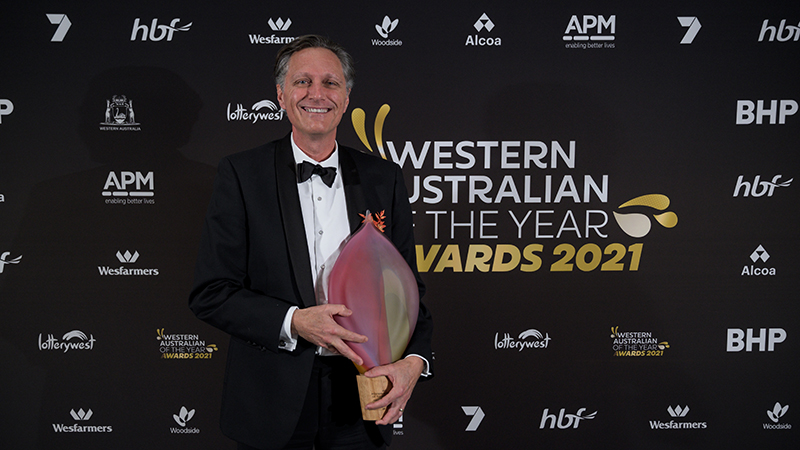
Congratulations to The Kids Research Institute Australia Director Professor Jonathan Carapetis AM, who last night won the Professions Award at the 2021 Western Australian of the Year Awards.
Indigenous children and young peoples live with an inequitable burden of acute rheumatic fever and rheumatic heart disease. In this Review, we focus on the epidemiological burden and lived experience of these conditions for Indigenous young peoples in Australia, New Zealand, and Canada. We outline the direct and indirect drivers of rheumatic heart disease risk and their mitigation.
Malaria in Bhutan has fallen significantly over the last decade. As Bhutan attempts to eliminate malaria in 2022, this study aimed to characterize the space-time clustering of malaria from 2010 to 2019. Malaria data were obtained from the Bhutan Vector-Borne Disease Control Program data repository.
Mainstream Australian mental health services are failing Aboriginal young people. Despite investing resources, improvements in well-being have not materialised. Culturally and age appropriate ways of working are needed to improve service access and responsiveness. This Aboriginal-led study brings Aboriginal Elders, young people and youth mental health service staff together to build relationships to co-design service models and evaluation tools.
We describe the birth prevalence and characteristics of congenital heart defects in a geographically defined Australian population. This descriptive, population-based study examined congenital heart defects in live births, stillbirths and pregnancy terminations ascertained by the Western Australian Register of Developmental Anomalies, 1990-2016.
The Kids Research Institute Australia is supporting calls for the urgent release of Biloela family from held detention.
We explore the acceptability of a novel, outreached-based approach to improve primary and primordial prevention of Strep A skin sores, sore throats and acute rheumatic fever in remote Aboriginal communities. A comprehensive prevention program delivered by trained Aboriginal Community Workers was evaluated using approximately fortnightly household surveys about health and housing and clinical records.
The objectives of this study are to assess the association between childhood bullying and preference-based health-related quality of life in Australian school children and their parents and estimate quality-adjusted life years associated with bullying chronicity. Children aged 8-10 years completed the child health utilities, while parents completed the Australian quality of life.