Skip to content
The Kids Research Institute Australia logo
Donate

Search

The human milk microbiome is minimally associated with breastfeeding practices

The human milk microbiome is dominated by typical oral and skin bacteria, suggesting that bacterial communities from the infant mouth and maternal skin contribute to the development of the human milk microbiome. It is postulated that breastfeeding characteristics, such as breastfeeding frequency and duration, could lead to different levels of exposure to oral and skin bacteria, and subsequently, altered bacterial profiles in human milk.  

Ensuring That Marginalized Young People Feel Welcome, Understood, and Empowered in Health Services: A Qualitative Examination of the Service Needs of Aboriginal LGBTQA+ Young People

A lack of appropriate care and discrimination in healthcare settings likely compounds the existing risks to mental health and well-being for Aboriginal and Torres Strait Islander lesbian, gay, bisexual, trans, queer/questioning, and asexual (LGBTQA+) young people. The current study contributes findings from Aboriginal LGBTQA+ young people's perspectives on their health service needs and preferences.

Mapping the global prevalence, incidence, and mortality of Plasmodium falciparum and Plasmodium vivax malaria, 2000-22: a spatial and temporal modelling study

Malaria remains a leading cause of illness and death globally, with countries in sub-Saharan Africa bearing a disproportionate burden. Global high-resolution maps of malaria prevalence, incidence, and mortality are crucial for tracking spatially heterogeneous progress against the disease and to inform strategic malaria control efforts. We present the latest such maps, the first since 2019, which cover the years 2000–22. The maps are accompanied by administrative-level summaries and include estimated COVID-19 pandemic-related impacts on malaria burden. 

Antimicrobial resistance in Staphylococcus aureus and Enterococci spp. isolates from bloodstream infections in Australian children, 2013 - 2021

Rising proportions of antimicrobial resistance (AMR) have been observed in both Staphylococcus aureus and Enterococcus spp. isolates.

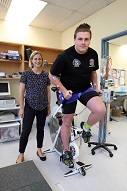
Resting Energy Expenditure and Metabolic Features in Children With Septo-Optic Dysplasia

Septo-optic dysplasia (SOD) is a major cause of congenital hypopituitarism and is known to be associated with overweight and obesity in up to 44% of children. Given the role of the hypothalamus in hormonal regulation, we sought to assess the association of resting energy expenditure (REE), appetite and physical activity with SOD. 

Critical Appraisal of Systematic Reviews Assessing Gut Microbiota and Effect of Probiotic Supplementation in Children with ASD—An Umbrella Review

Given the significance of gut microbiota in autism spectrum disorder (ASD), we aimed to assess the quality of systematic reviews (SRs) of studies assessing gut microbiota and effects of probiotic supplementation in children with ASD. PubMed, EMBASE, PsycINFO, Medline, and Cochrane databases were searched from inception to November 2024. 

Returning raw genomic data to research participants in a pediatric cancer precision medicine trial

In pediatric cancer precision medicine clinical trials settings, parents proactively seeking treatment and answers to causation may request return of their child's raw data and/or biospecimen. To satisfy such requests, the ZERO Childhood Cancer Program required a guidance document.

Subnational tailoring of malaria interventions to prioritize the malaria response in Guinea

In the context of high malaria burden yet limited resources, Guinea's national malaria programme adopted an innovative subnational tailoring approach, including engagement of stakeholders, data review, and data analytics, to update their malaria operational plan for 2024-2026 and identify the most appropriate interventions for each district considering the resources available.

Eating and drinking abilities and respiratory and oral health in children and young adults with cerebral palsy

To investigate the potential risk factors of respiratory illness (ethnicity, oral health, and eating and drinking ability) in children and young adults with cerebral palsy.