Skip to content

Search

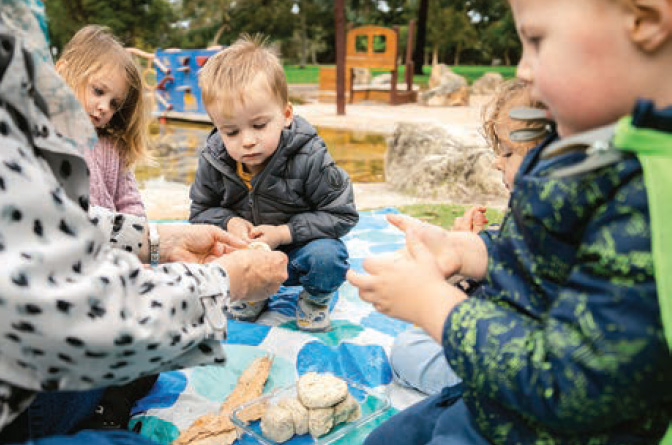
Population Approaches to Promoting Relational Health From Early Life

In this paper we provide an integrative synthesis of eight systematic reviews that compromise our systematic review series entitled ‘Population Perspectives on Nurturing Relational Health from Early Life’. We reflect on what we know, what we don’t know, and what we need to know to better safeguard the interpersonal world of the child.

Using head-mounted augmented and virtual reality devices for anaesthesia education: a scoping review

Head-mounted devices (HMDs) have been explored in anaesthesia education for their unique ability to have head-tracked immersive simulations adaptable to diverse clinical scenarios. This scoping review examines how HMD-based augmented or virtual reality enhances anaesthetic skill learning in clinicians, trainees, and students.

Critical Events in Anaesthetised Kids Undergoing Tracheal Intubation (CRICKET)—study protocol for an international multicentre prospective observational study

Critical Events in Anaesthetised Kids undergoing Tracheal Intubation (CRICKET) is a prospective, international multicentre observational study with the objective of capturing, assessing, and analysing critical events associated with tracheal intubation in children.

Psychological wellbeing outcomes across genders in childhood and adolescence aged 8–18 years: a population-level perspective

This study aimed to examine the difference in levels of psychological wellbeing outcomes of binary and non-binary transgender and cisgender students aged 8–18 years in South Australia using population-level data.

The impact of a dog-facilitated mobile physical activity intervention on children’s social–emotional development: a randomized controlled trial

Dog ownership has been suggested to be positively associated with children's physical, social, and emotional development. This study investigated the effect of a mobile health dog-facilitated physical activity intervention on young children's social-emotional development and attachment to the family dog.

Understanding parental decisions to decline or delay infant RSV immunisation, nirsevimab, in Western Australia in 2024

In 2024, the government of Western Australia introduced 'nirsevimab', a monoclonal antibody offering protection from respiratory syncytial virus (RSV), for eligible infants. This study explores why parents of infants who were eligible to receive nirsevimab opted to decline or delay the immunisation.

The longitudinal network of social and emotional development in middle childhood

The understanding of children's social and emotional development in middle childhood is critical to promote well-being throughout the life course. Children who fail to develop social and emotional competencies are more likely to experience difficulties in adulthood and, in the worst case, psychopathology. The current study will employ Cross-Lagged Network Models to investigate children's social and emotional development among Australian children aged 6 to 10 years. 

Impact: Paradigm Shift

On this Research Impact page, we showcase real game-changers - research that changes the very way other scientists around the world think and approach challenges. The far-reaching impact on children and families for all the stories shown on these pages is both exciting and significant.

Impact: Collaboration

On this Research Impact page, we list stories helping demonstrate how we collaborate with other leaders, innovators, communities, and international stakeholders to ensure excellent research results. The better our results, the better the chances of research making a real difference.

Multigenerational Familial and Environmental Risk for Autism (MINERvA) Network

The MINERvA Network will allow more accurate and precise determination of the contributions of familial and environmental factors to the etiology of autism.